

November 2025 marked a bit of a milestone for GeoWorld Travel, as we completed our tenth Morocco tour!
Starting and finishing in Marrakech, our 11-day journey took us by 4×4 across the High Atlas Mountains, through the fossil-rich landscapes of the Anti-Atlas and onwards to the edge of the mighty Sahara Desert. Morocco is one of the most geodiverse countries on Earth, and this trip once again demonstrated just how much geological and palaeontological variety can be packed into one extraordinary adventure.
There were trilobites, orthoceras, stromatolites and goniatites, ancient coral reefs, mineral mines, dinosaur fossils and trackways, enormous folds and faults, and rocks spanning hundreds of millions of years of Earth history. We also had the opportunity to meet the fossil miners and preparators whose remarkable skills help reveal some of Morocco’s palaeontological treasures.
Most importantly, it was an absolutely fantastic trip with a brilliant group. Plenty was learnt, plenty was discovered and plenty of fun was had along the way. Once again, we also received wonderful support from Youssef and the team at Morocco Explorer.
We’ve selected 50 of our favourite photos from the trip to tell the story of this epic geological adventure.
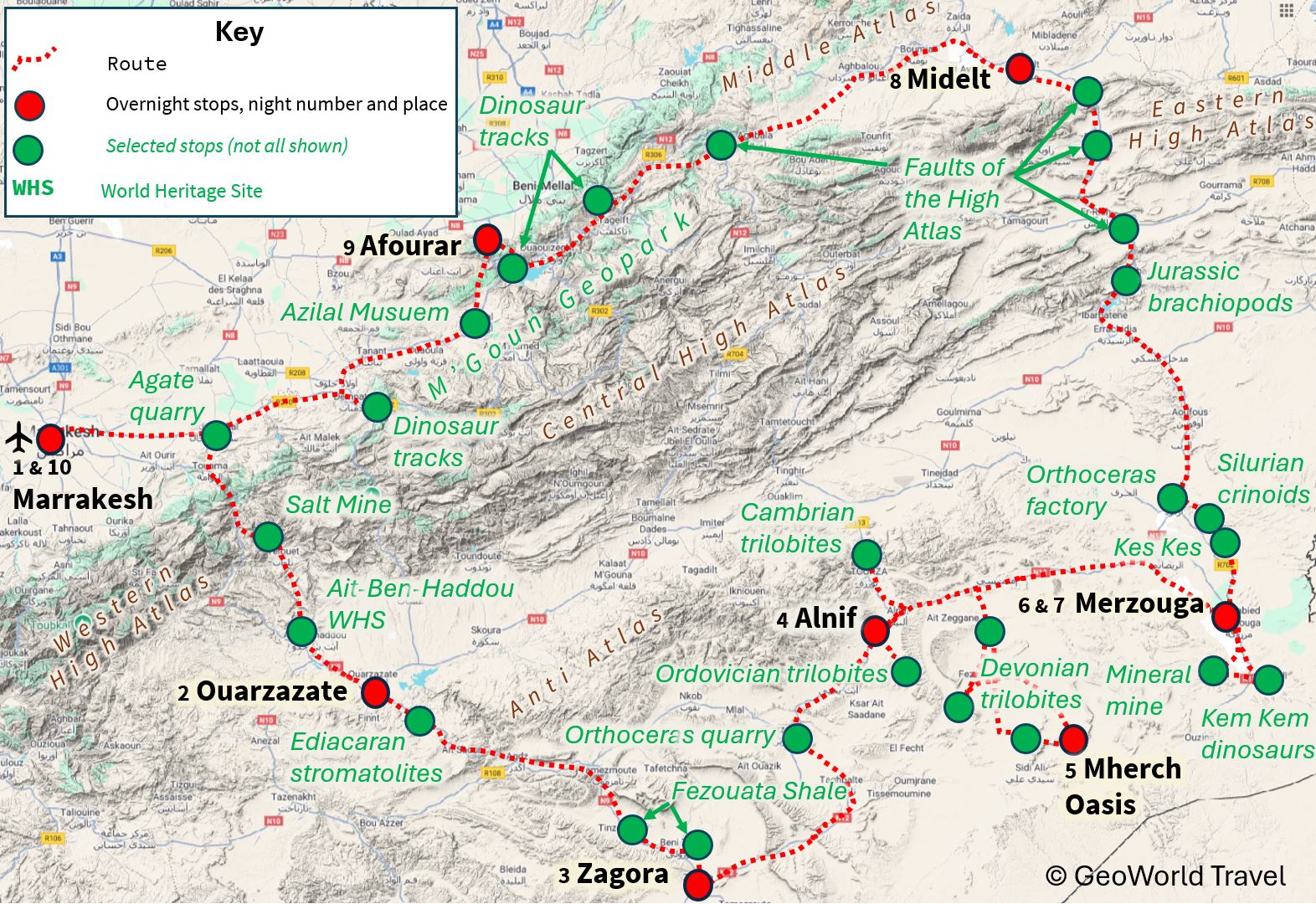
Day One: Arrival in Marrakech
Our group came together in Marrakech, ready for 11 days exploring the geology, fossils and landscapes of Morocco.
Day Two: Across the High Atlas Mountains
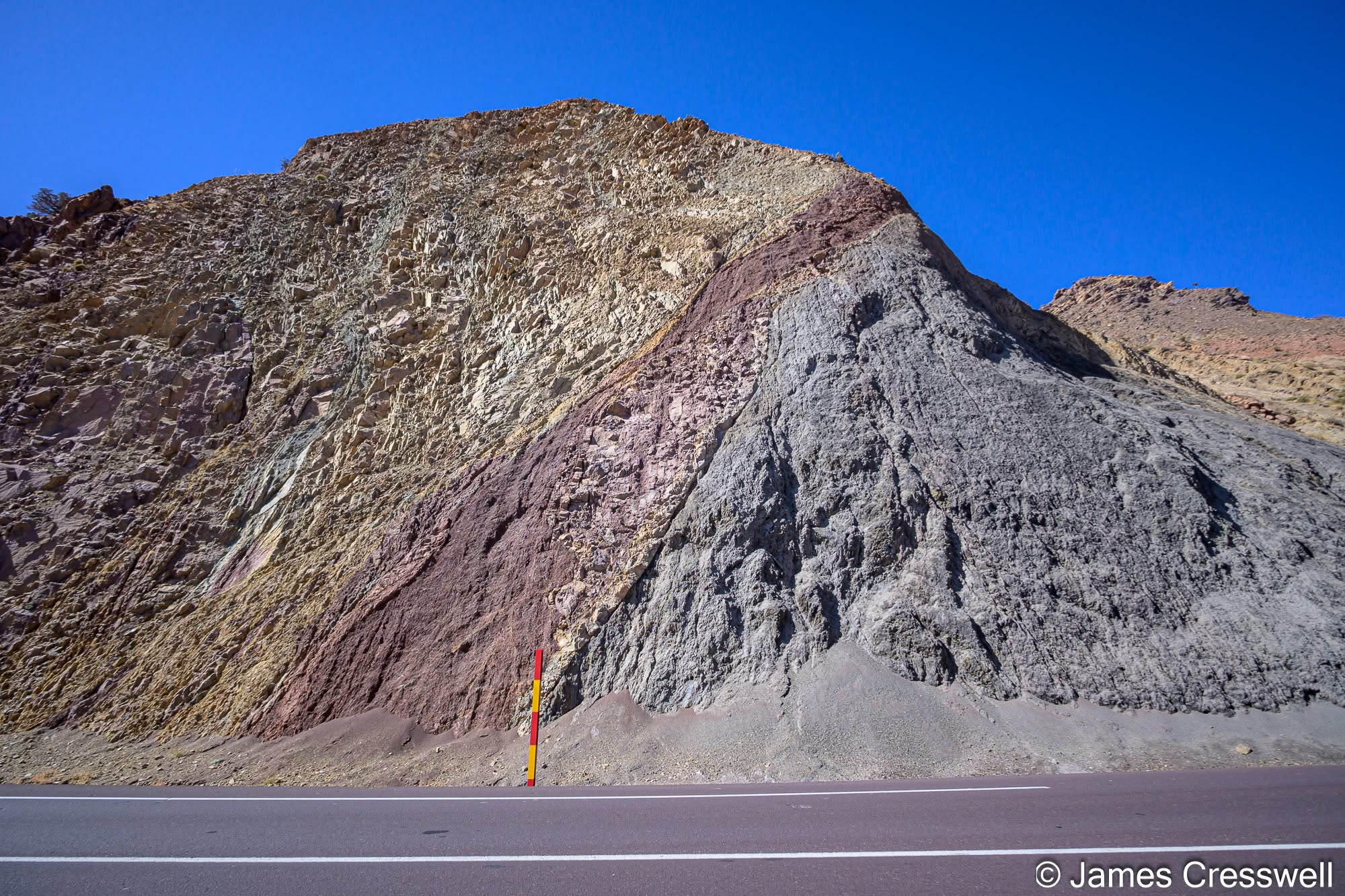
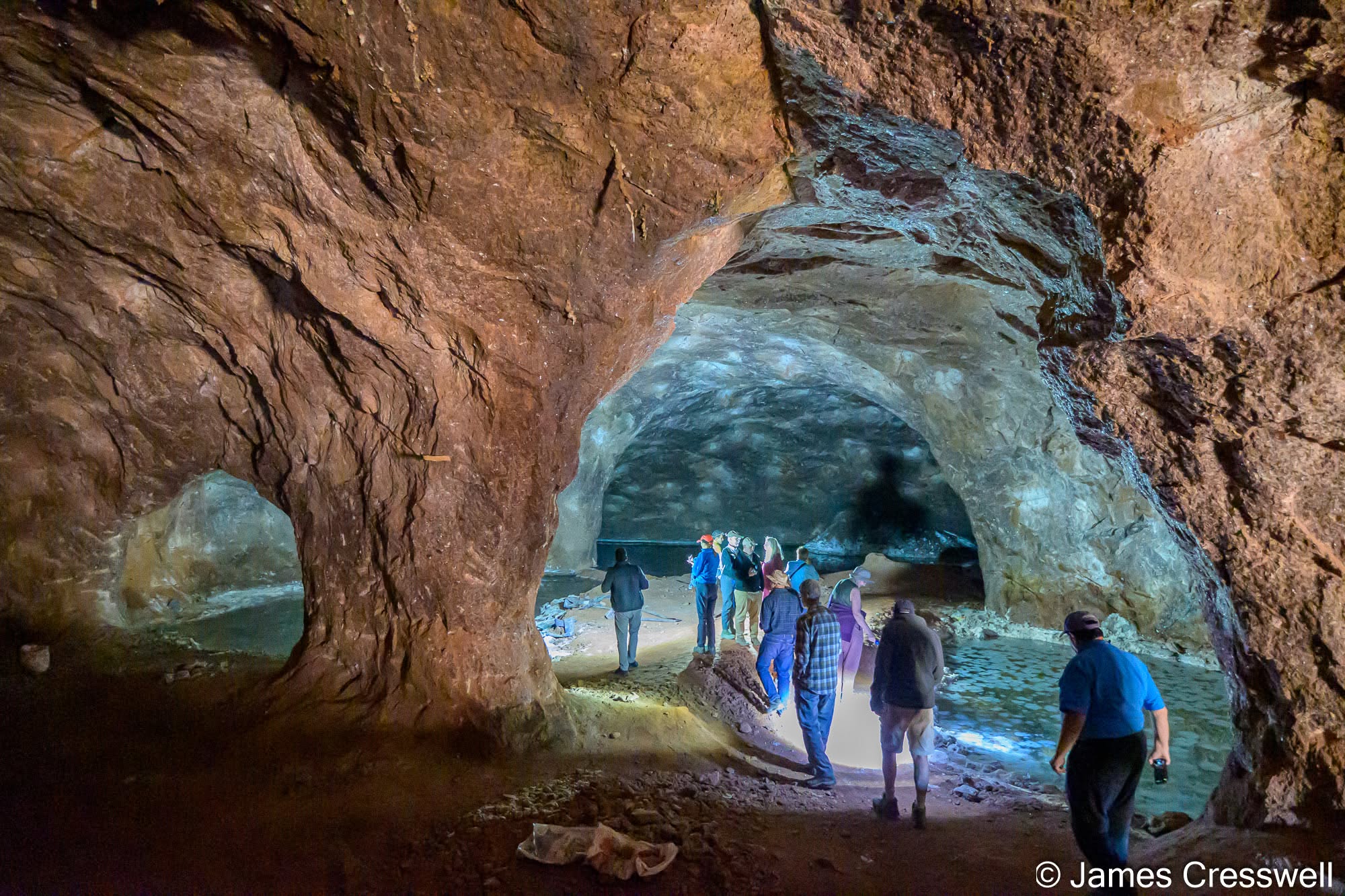
Leaving Marrakech behind, we headed into the High Atlas, exploring the Sidi Rahal agate mine, major faults and unconformities, the historic Telouet salt mine and the spectacular Kasbah Ait-Ben-Haddou World Heritage Site.
.
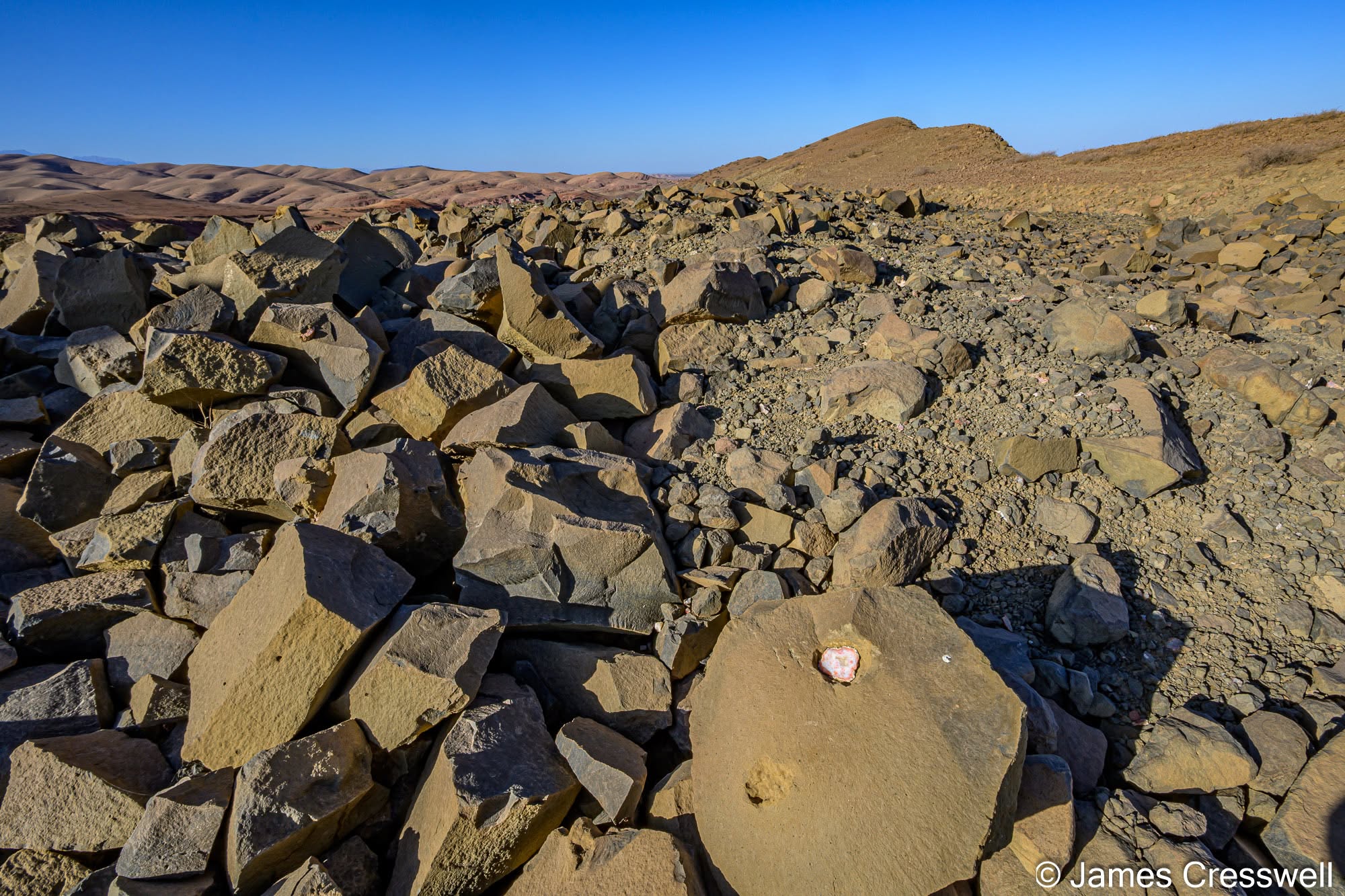
Left: An agate embedded in a cooling column which is formed of Triassic-aged basalt, at the Sidi Rahal agate quarry.
Top right: A fault in the South Atlas Fault Zone. Yellow/red coloured Triassic rocks can be seen sliding past dark coloured Ordovician-aged sedimentary rocks.
Middle right: The GeoWorld Travel group in the salt mine at Telouet. The mine is on the old Marrakech-Ouarzazate-Timbuktu road and in the 11th century, the salt from this mine was literally worth its weight in gold!
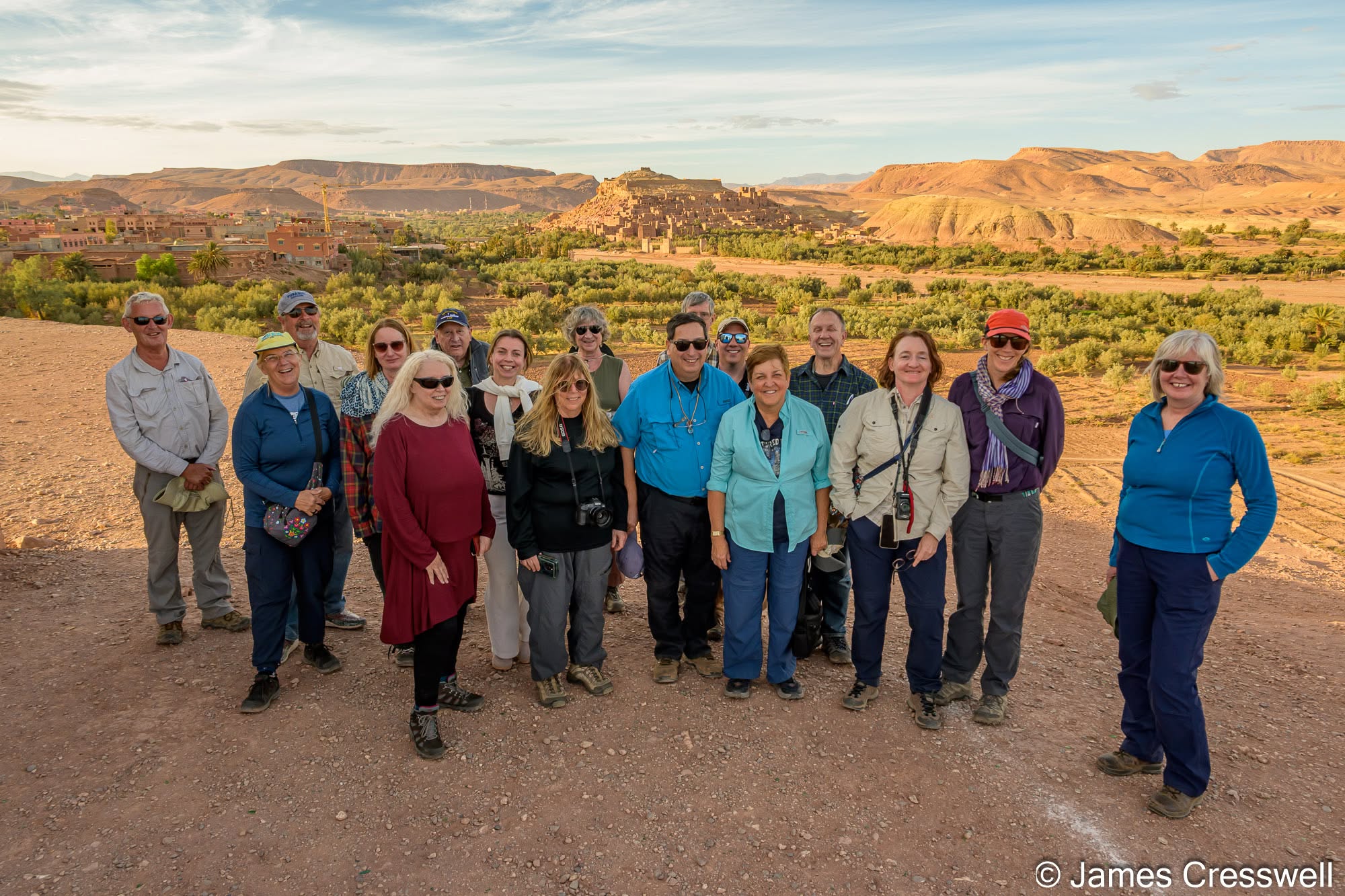
Bottom: The GeoWorld Travel group with Ait Ben Haddou World Heritage Site in the background. The site has been fortified since the 11th century, but the current buildings date from the 17th century. This is the most famous ‘ksar’ in the Ounilla Valley. A ksar is a group of earthen buildings surrounded by high walls and is a traditional pre-Saharan habitat.
Day Three: Ancient Life in the Anti-Atlas
Our journey into deep time began with remarkable 600-million-year-old Ediacaran stromatolites before we continued into the Anti-Atlas and the internationally important Fezouata Shale Lagerstätte, famous for its exceptionally preserved Ordovician fossils.
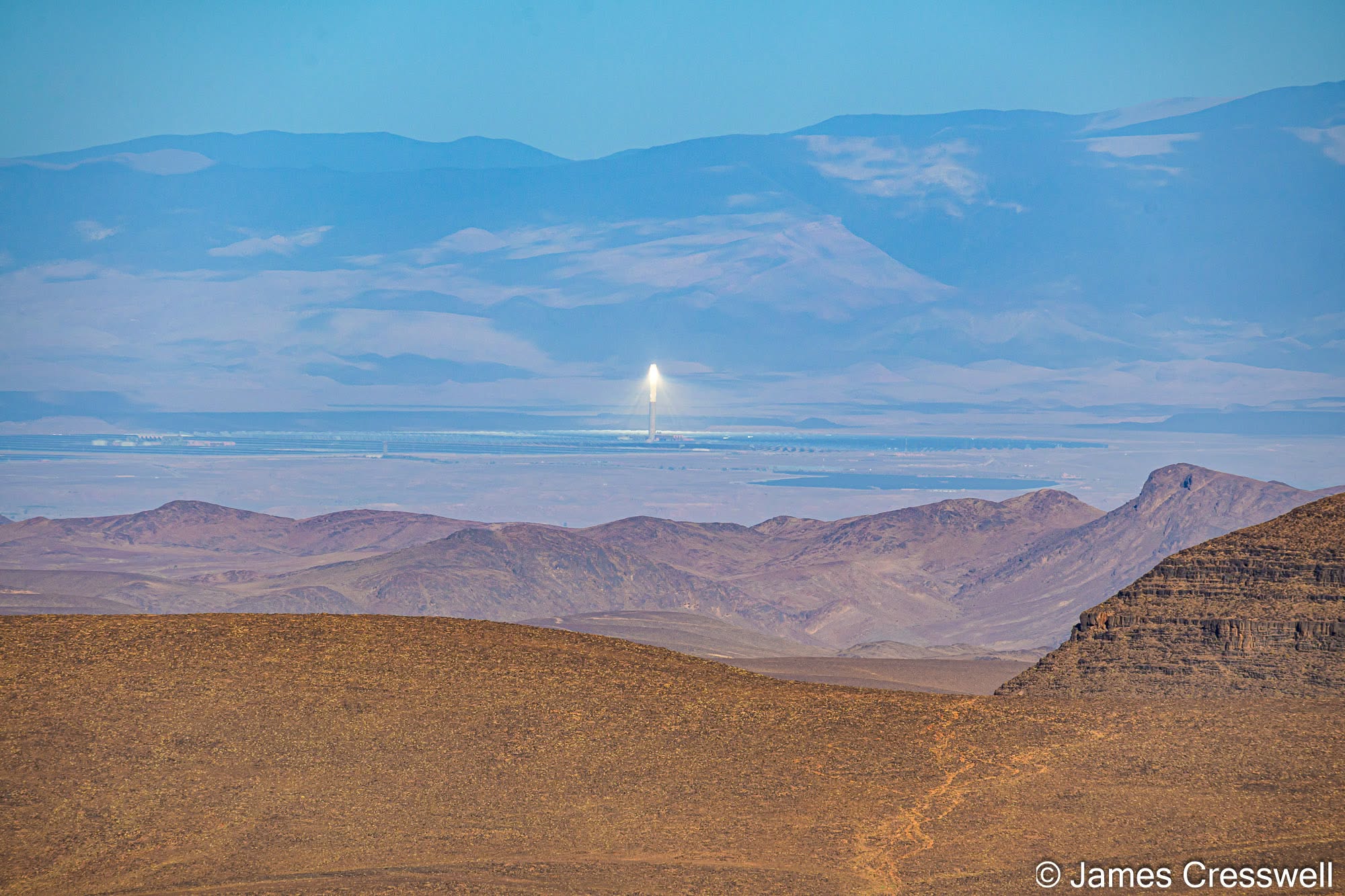
Left: A view towards Ouarzazate Solar Power Station (OSPS) from the highest point of the Anti-Atlas Mountains; in the background are the High Atlas Mountains. The OSPS is also called Noor Power Station and it is the world’s largest concentrated solar power plant. The tower visible in the photo is part of Noor 3, which incorporates mirrors mounted horizontally on platforms which are supported by ten metre columns. Each platform is roughly the size of a tennis court, and the panels follow the light, reflecting it to a 250m tall solar tower.
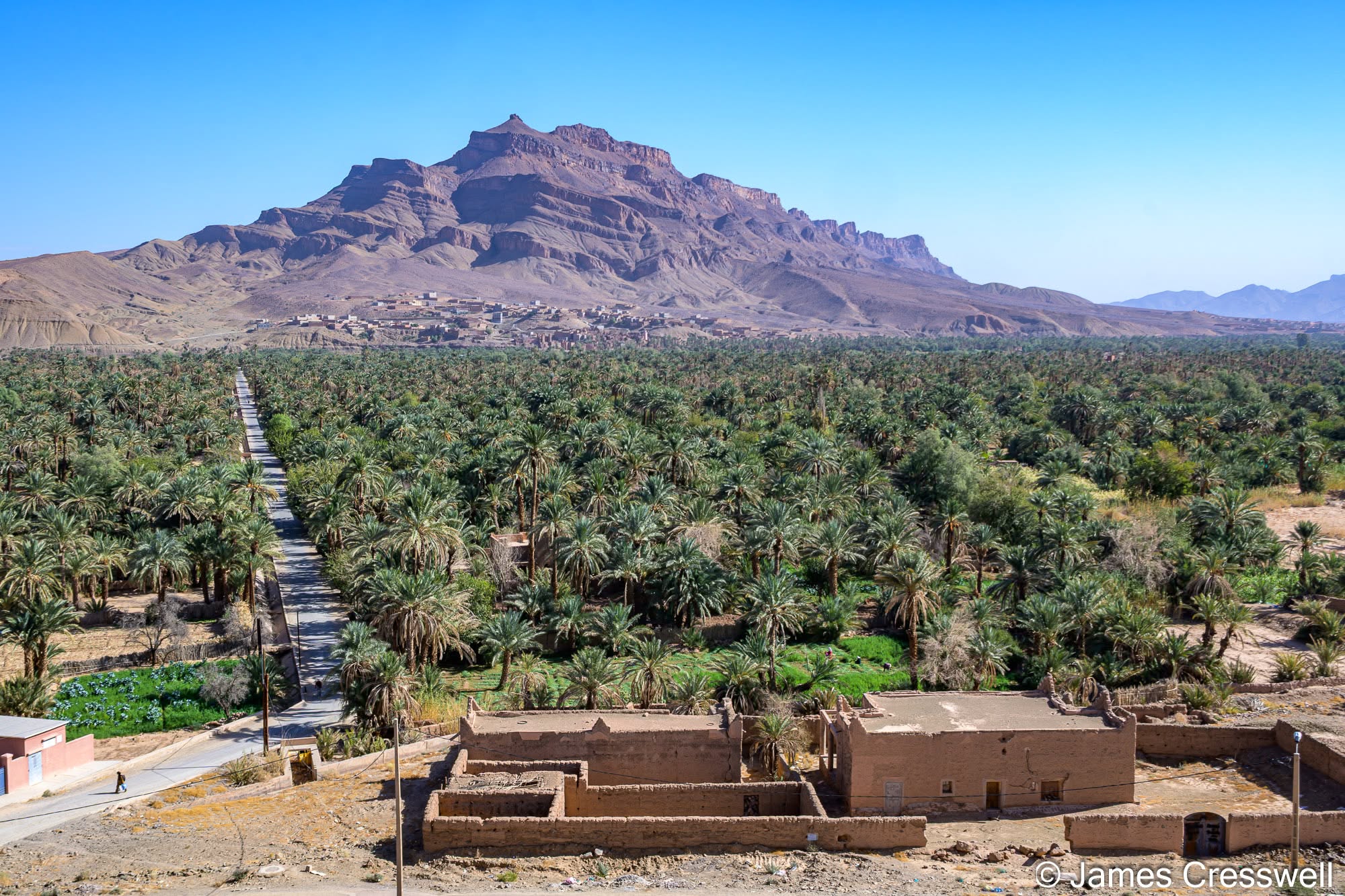
Top Right: A view of Jbel Kissane, from Agdz, giving a good view of Middle Ordovician stratigraphy
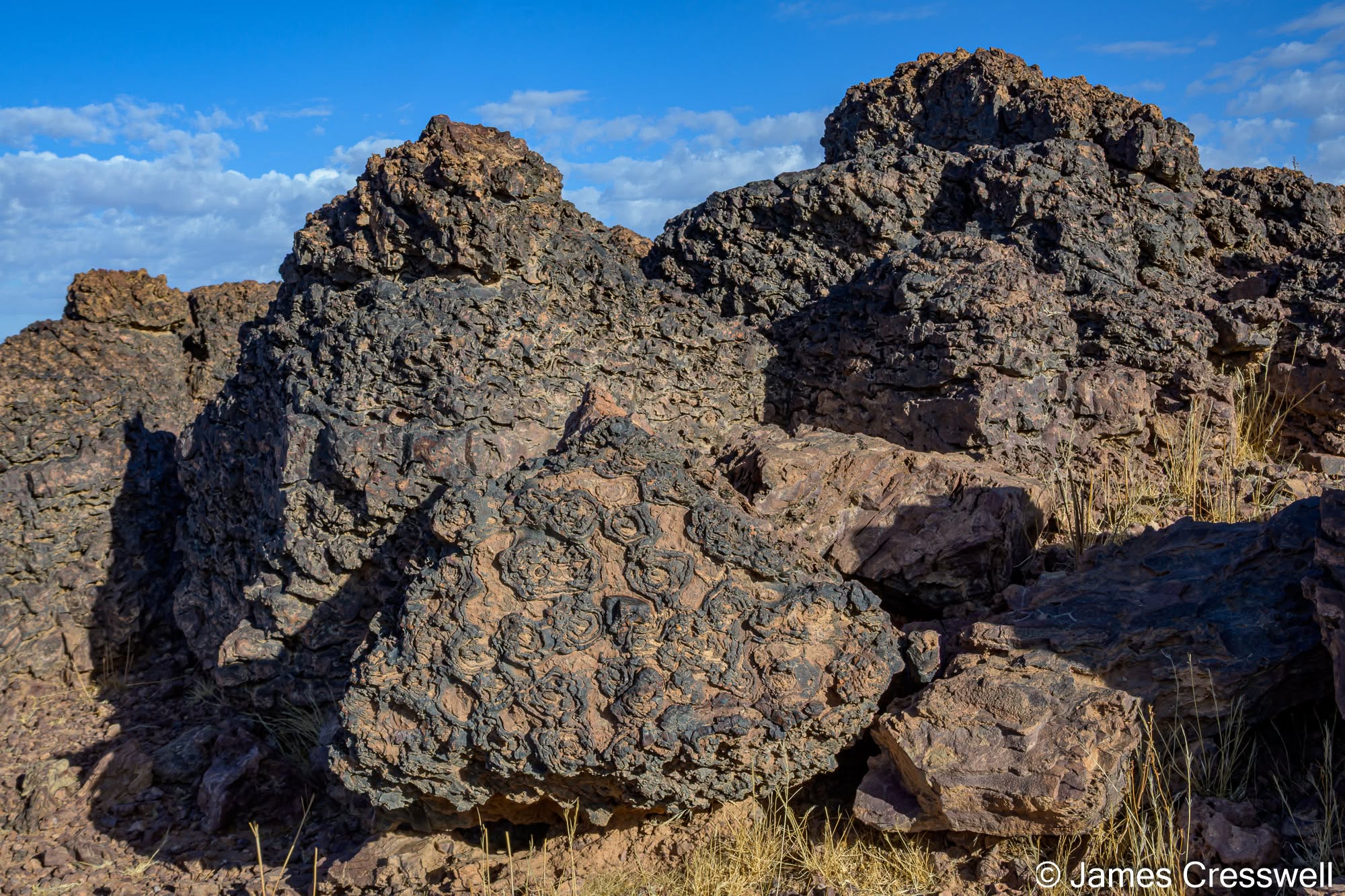
Bottom Right: Above: Stromatolites which are 570ma old, making them Precambrian in age, from the Ediacaran period of the Neoproterozoic. They occur in the Ouarzazate volcano-sedimentary supergroup which preserves a record of both explosive volcanic activity and effusive lava flows. The stromatolites grew around the shore of ponds in this volcanically active area.
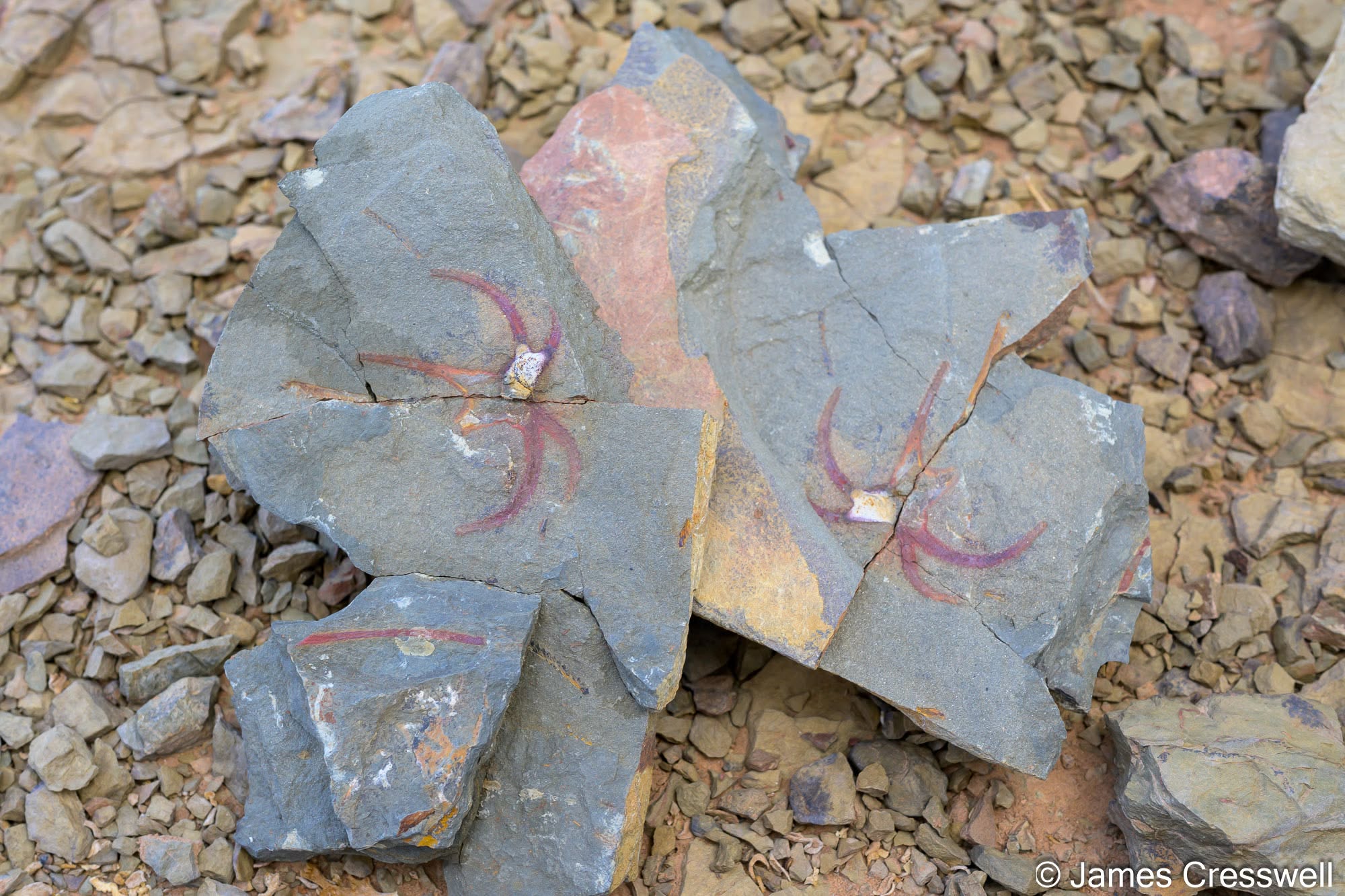
Left: A marrellid arthropod, found in the Lower Ordovician Fezouata Shale Lagerstätte. These arthropods shows exceptional soft-bodied preservation and are one of the several groups of animal that are known from both the Fezouata Shale and the famous Cambrian-aged Burgess Shale in Canada..
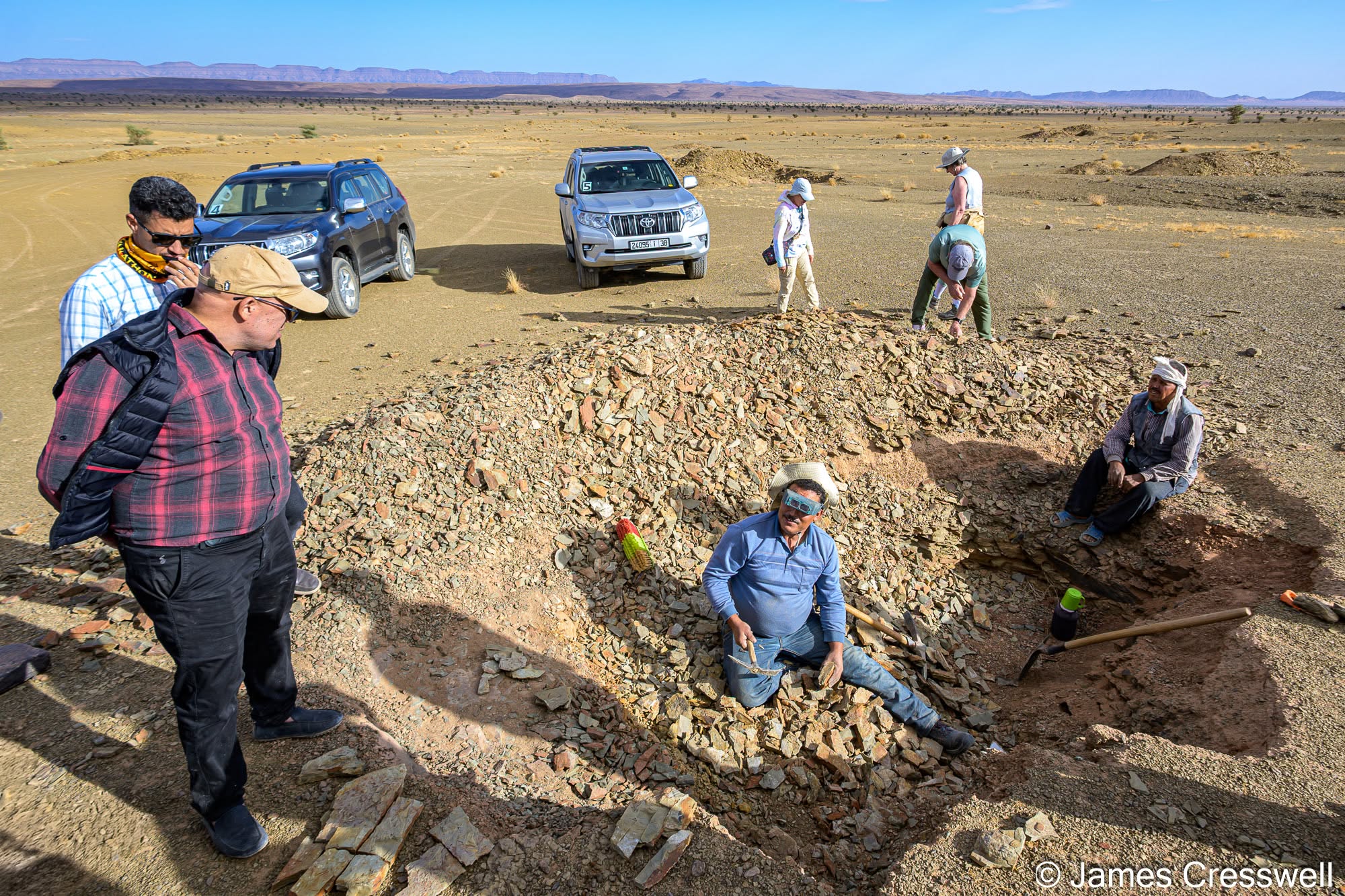
Top Right: Lahcen Ben Moula digging in the Fezouata Shale Lagerstätte. It was his father, Mohamed, who discovered this famous fossil site.
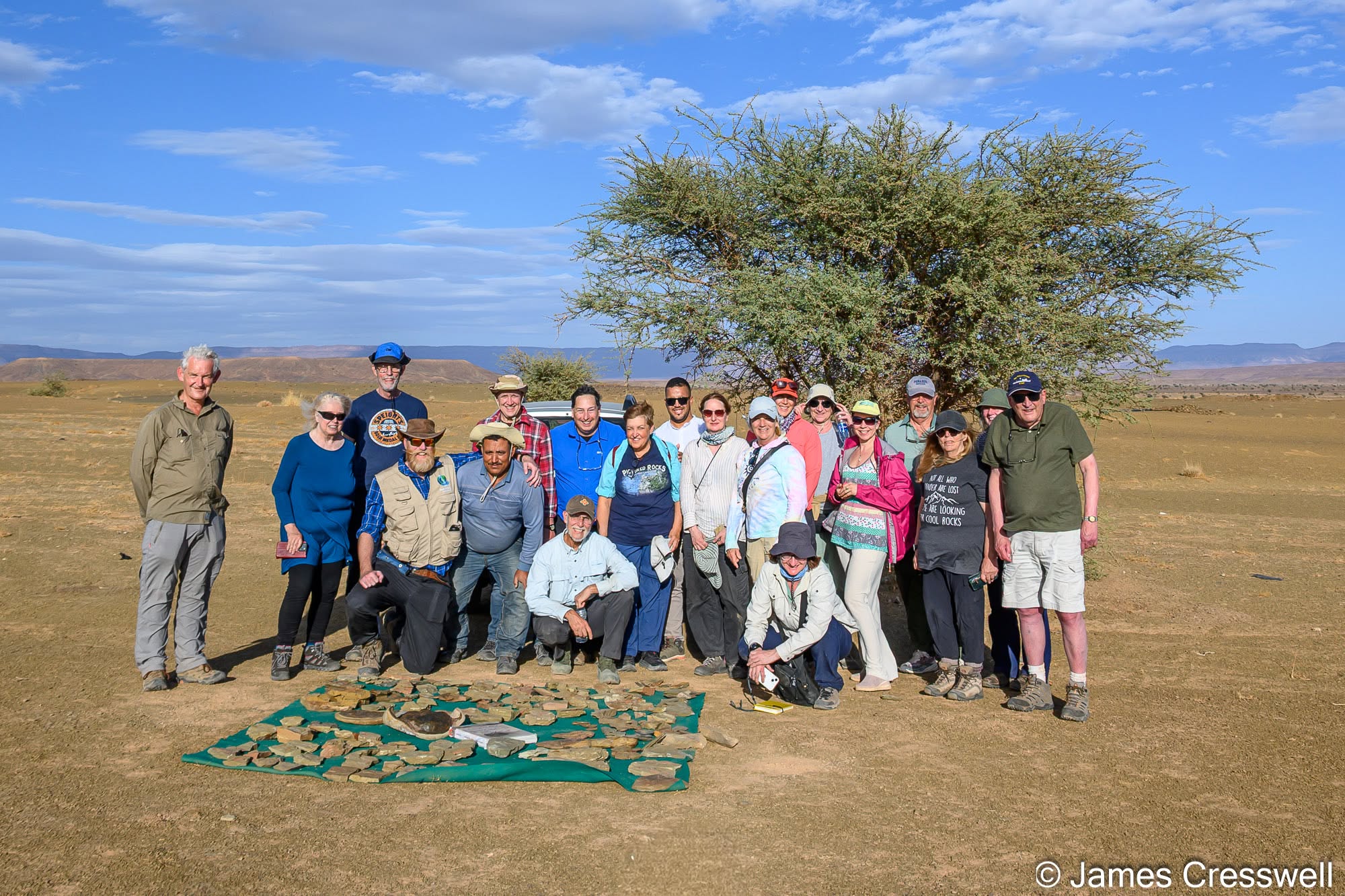
Bottom Right: The GeoWorld Travel group at the Fezouata Shale Lagerstätte, with specimens laid out in front for us to examine which Lahcen Ben Moula had found previously.
Day Four: Orthoceras and the Trilobites of Alnif
A day dedicated to some of Morocco’s most famous fossils. We visited the Saredrar Orthoceras quarry, saw the painstaking work involved in preparing Devonian trilobites and explored Jebel Tiskaouine, where huge numbers of Ordovician trilobites have been mined.
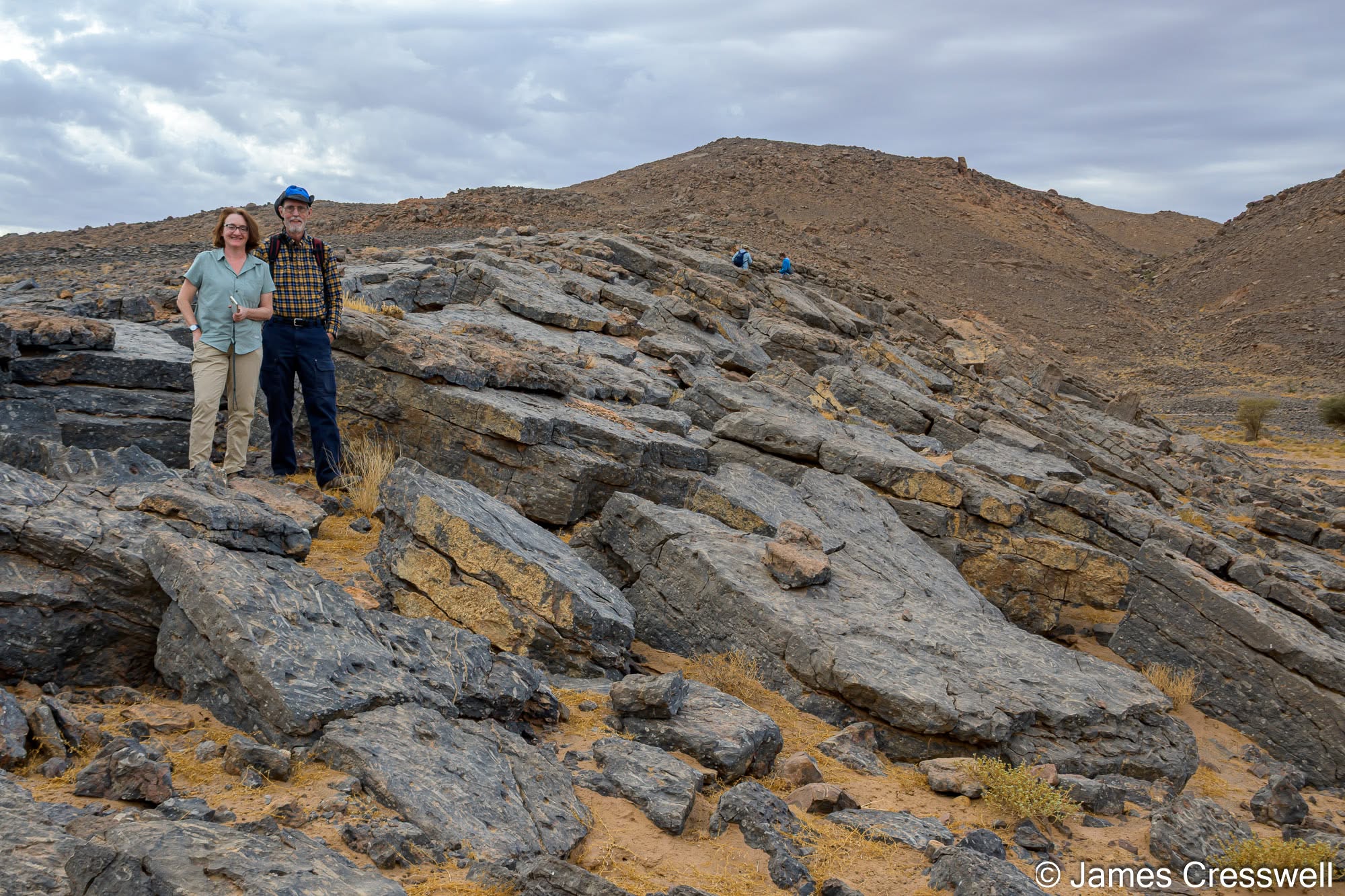
Left: Natacha and Phil standing on top of an outcrop of Silurian-aged orthoceras limestone at Serdrar. Close to this outcrop is the large Serdrar orthoceras quarry. Specimens from this quarry can be found in fossil shops all over the world.
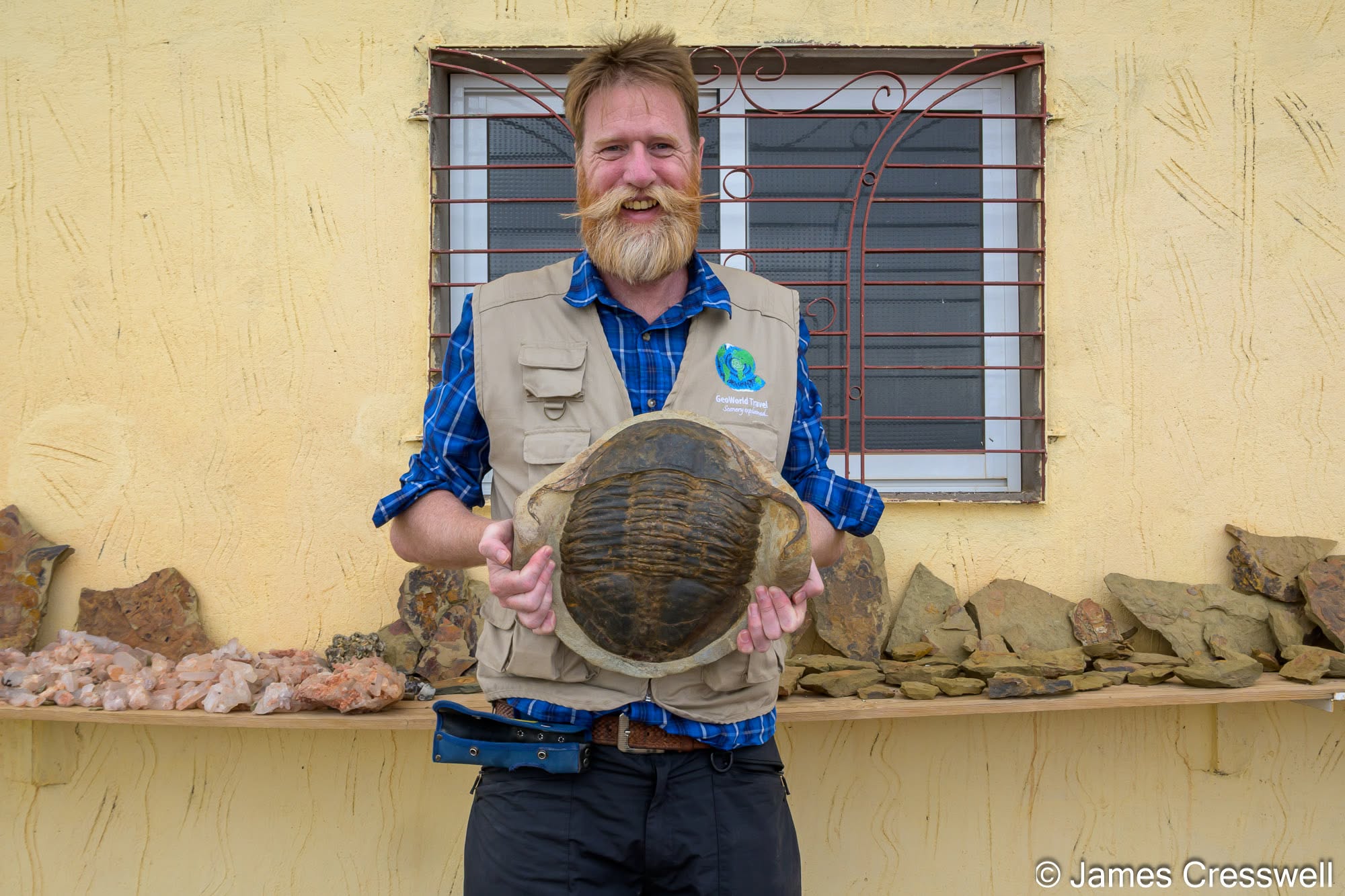
Right: James holding an Asaphellus stubbsi trilobite from the Fezouata Shale of Ouled Slimane at Lahcen Ben Moula’s shop, near Alnif
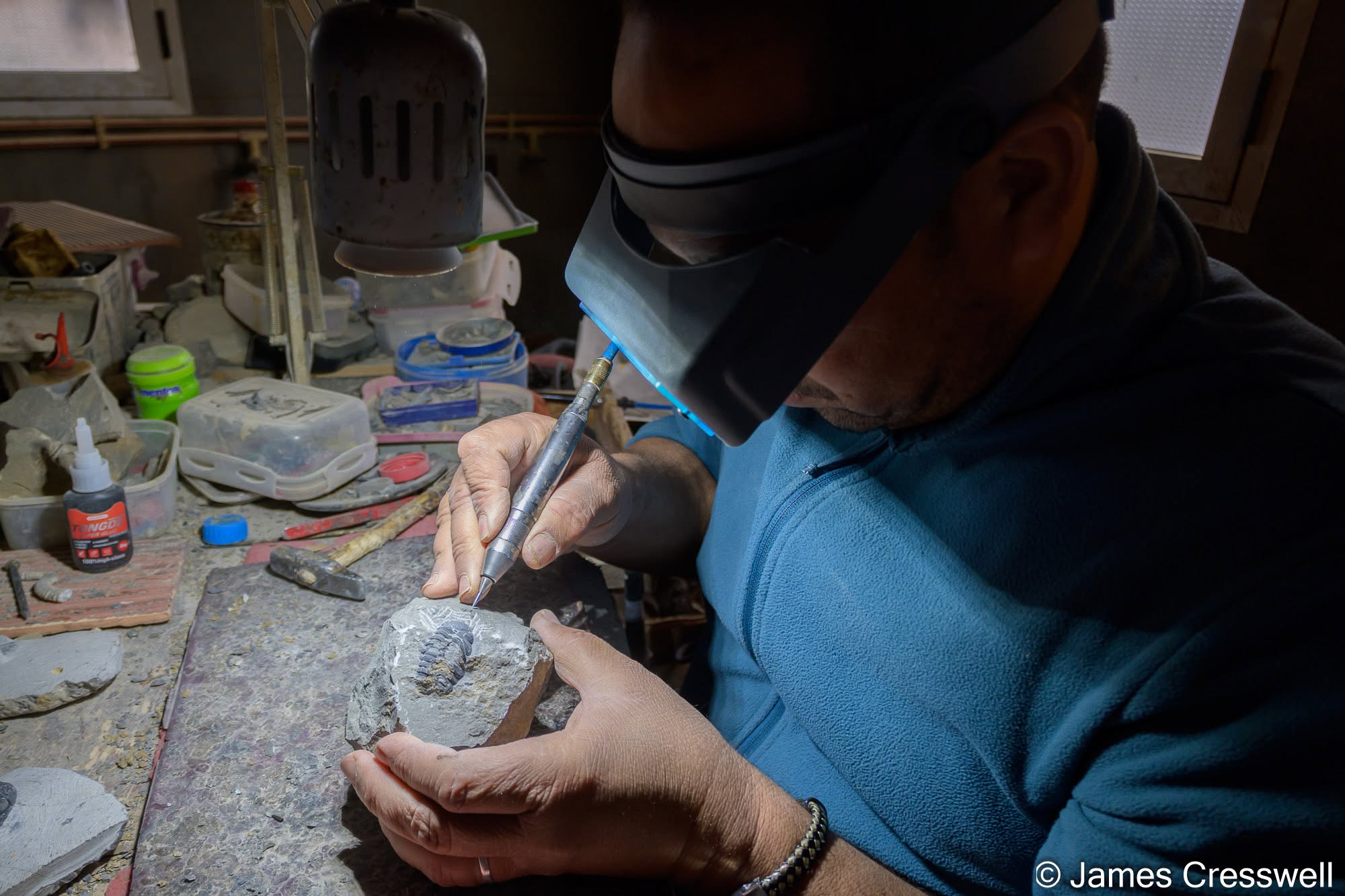
Left: A fossil preparator painstakingly working on a trilobite at Mertou Trilobites workshop, near Alnif
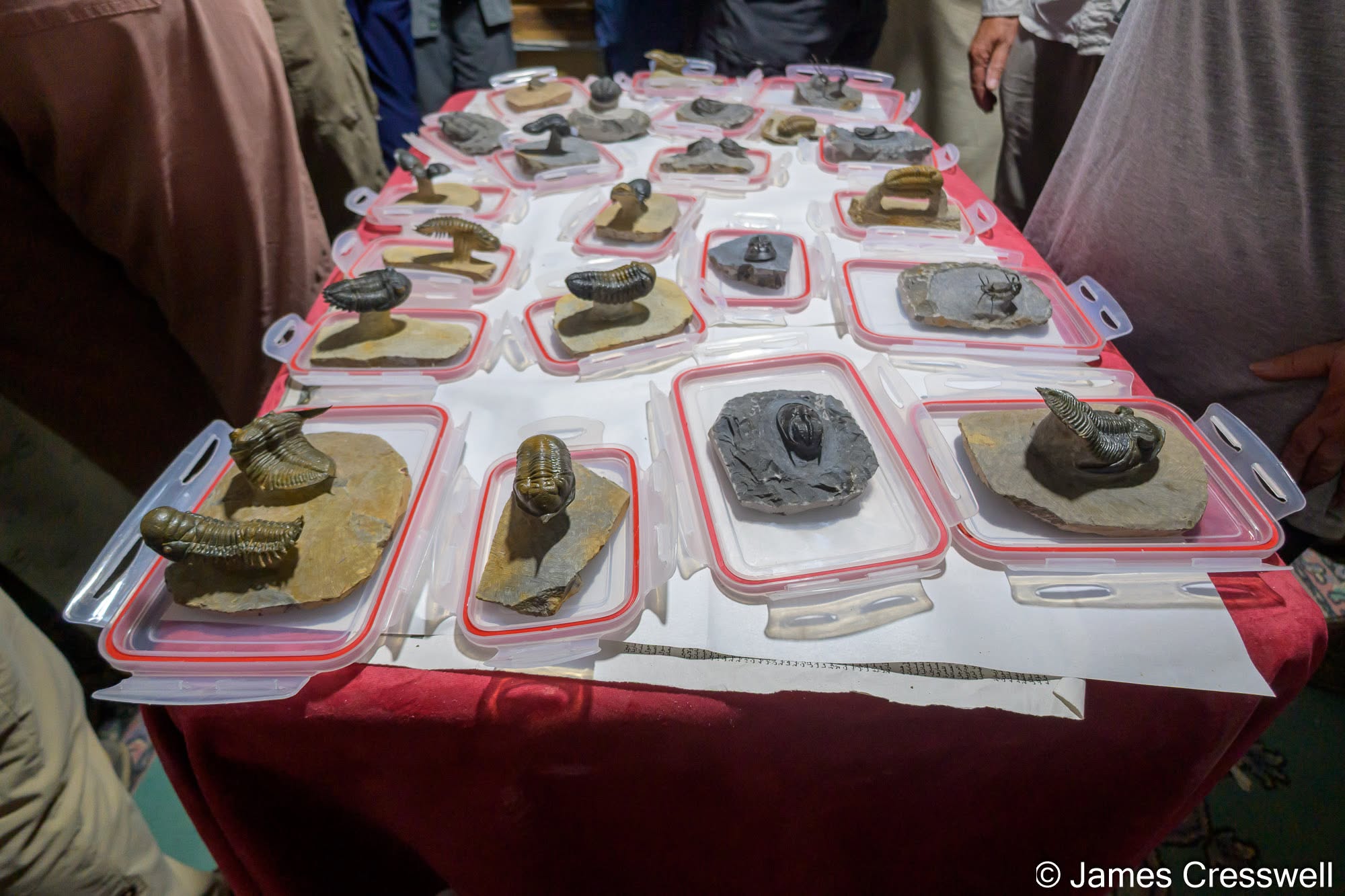
Right: Finished trilobites on display at Mertou Trilobites workshop, near Alnif.
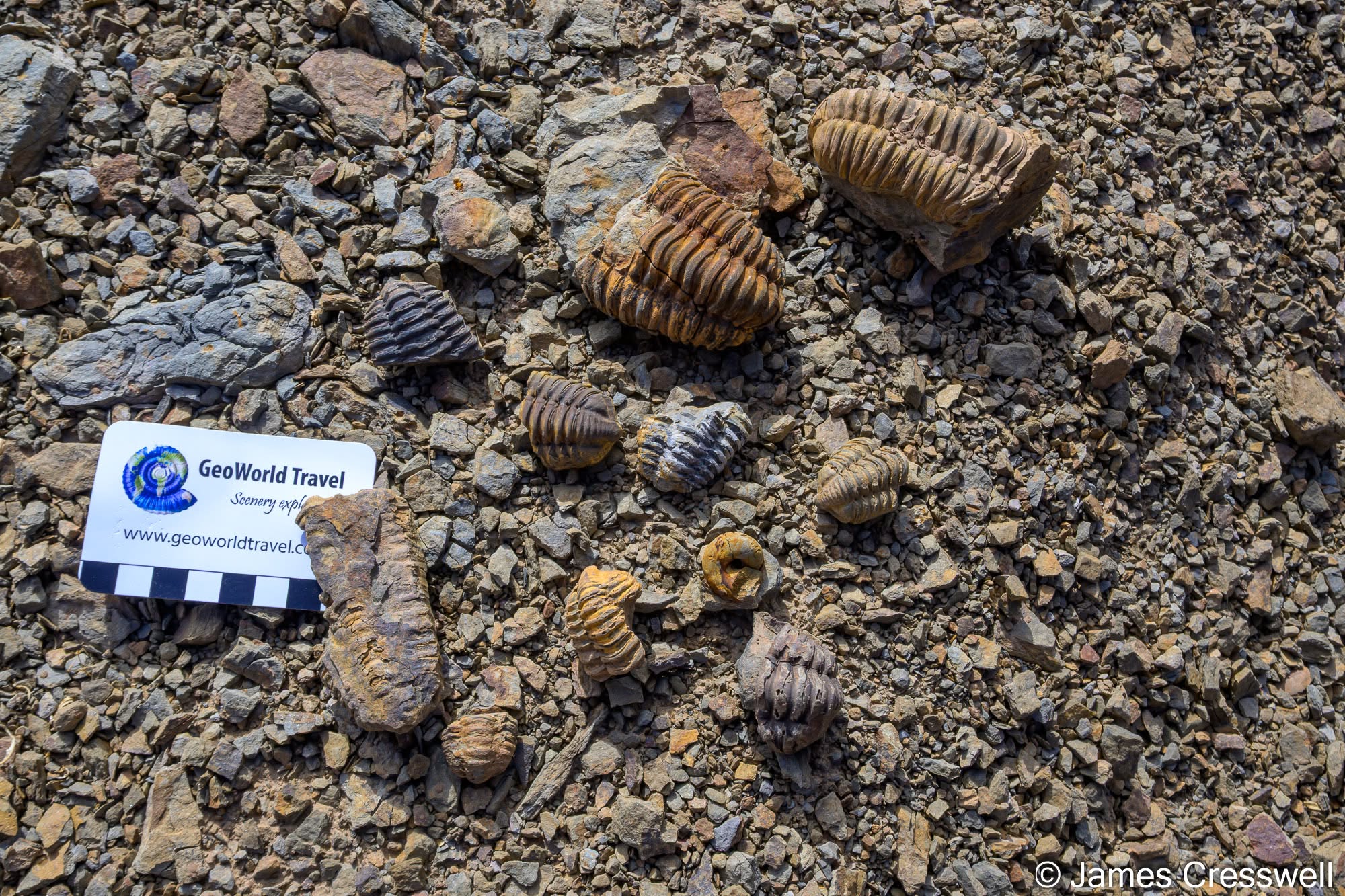
Above: A selection of Calymenes (or mud bugs) lying on the ground at Jebel Tiskouine. These have been discarded by local fossil miners, as they are not complete examples. This trilobite has been stocked in the fossil shops of the world for over 20 years and 15 million specimens have been sold, many from this site.
Day Five: Into the ‘Lost World’ of Trilobites
Around Alnif, the self-proclaimed ‘Trilobite Capital of the World’, we explored Cambrian and Devonian fossil sites and met local fossil miners before heading off-road into the remote Maider Basin for a night at the Mharch desert oasis.
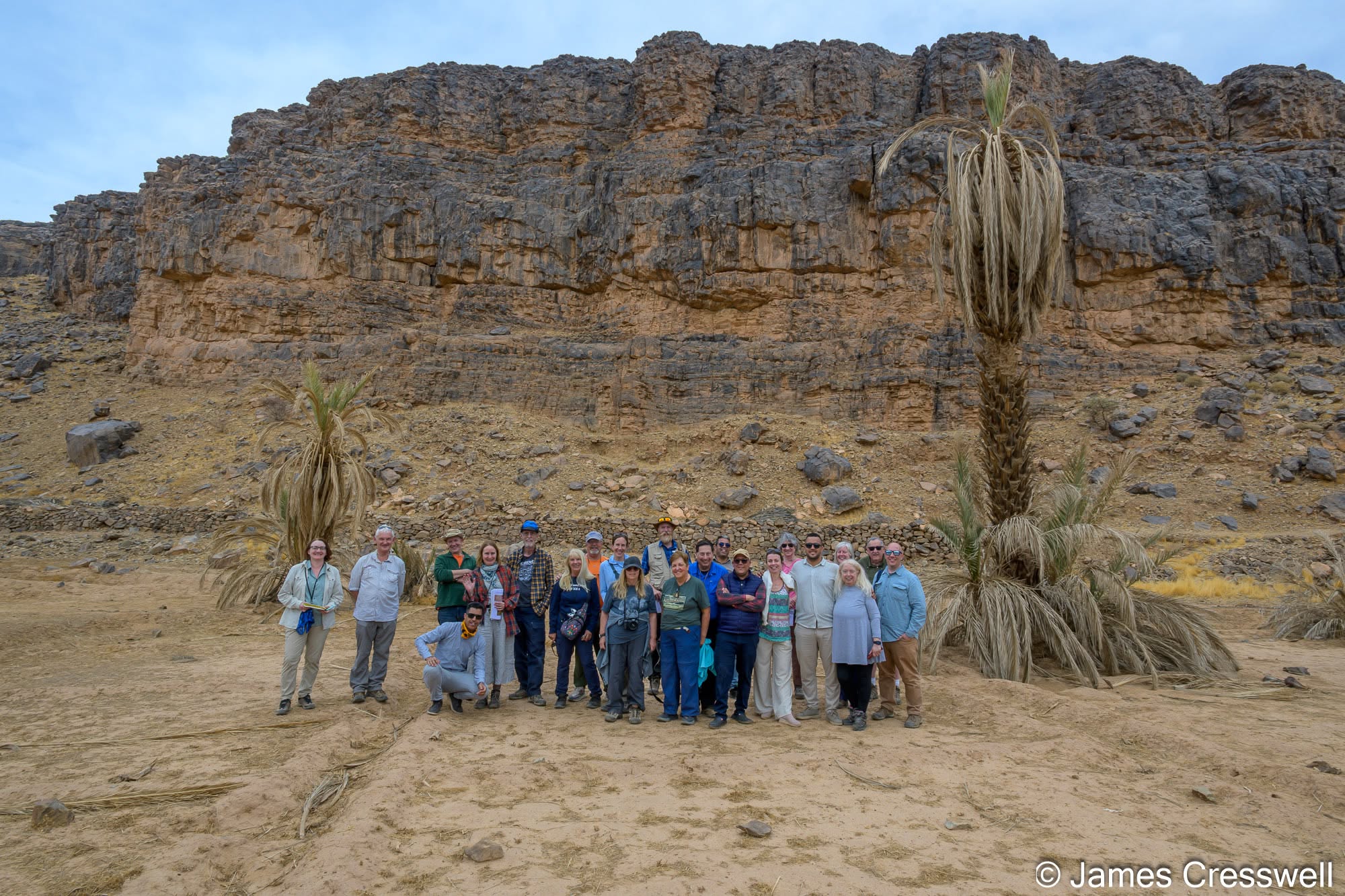
Top Left: The GeoWorld Travel group in front of a cliff near Alnif. The rocks that form the cliff were deposited in the Alnif Glacial Tunnel Valley. This was a subglacial valley that existed underneath an ice sheet in the end Ordovician glaciation.
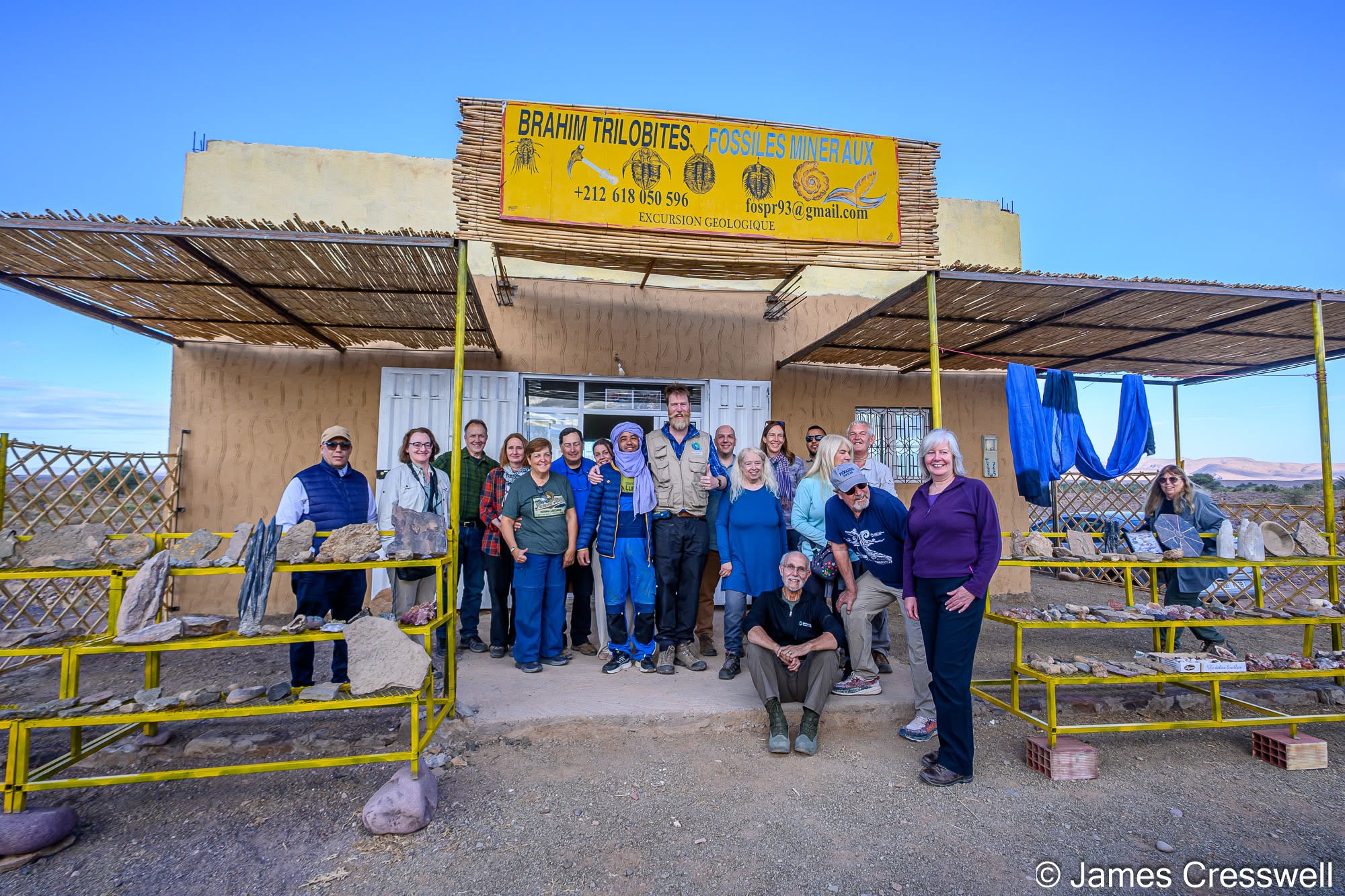
Bottom Left: The GeoWorld Travel group at Brahim Ben Moula’s trilobite shop near Alnif.
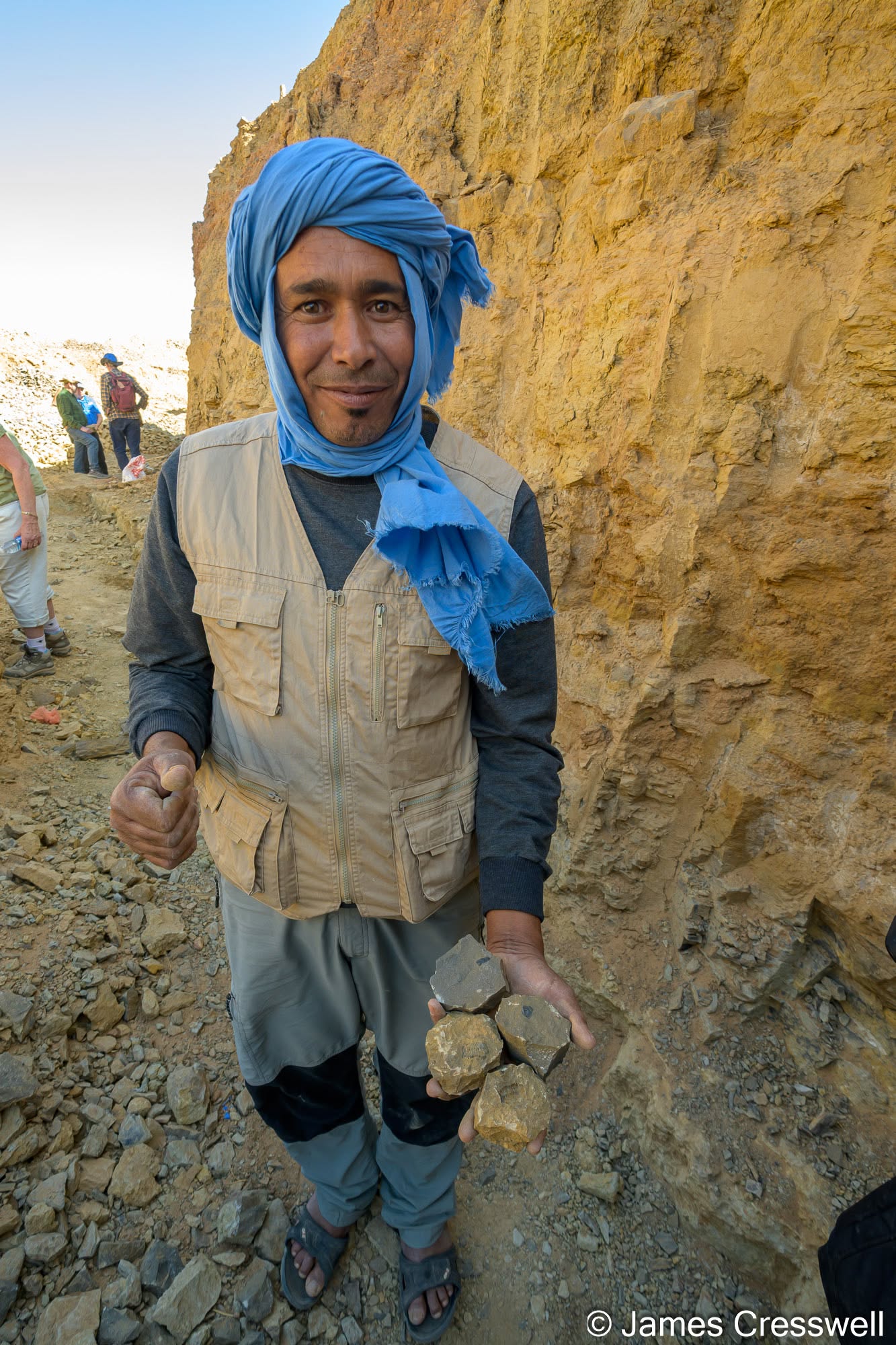
Right: Local fossil miner, Salem, showing us his finds at El Atchana. El Atchana is a site where a lot of well-known Devonian trilobites are extracted. The Ihander Formation outcrops here, which is Pragian (Devonian) in age. There are two different fossil horizons which are named after their most famous trilobites: Dicranurus & Kolihapeltis.
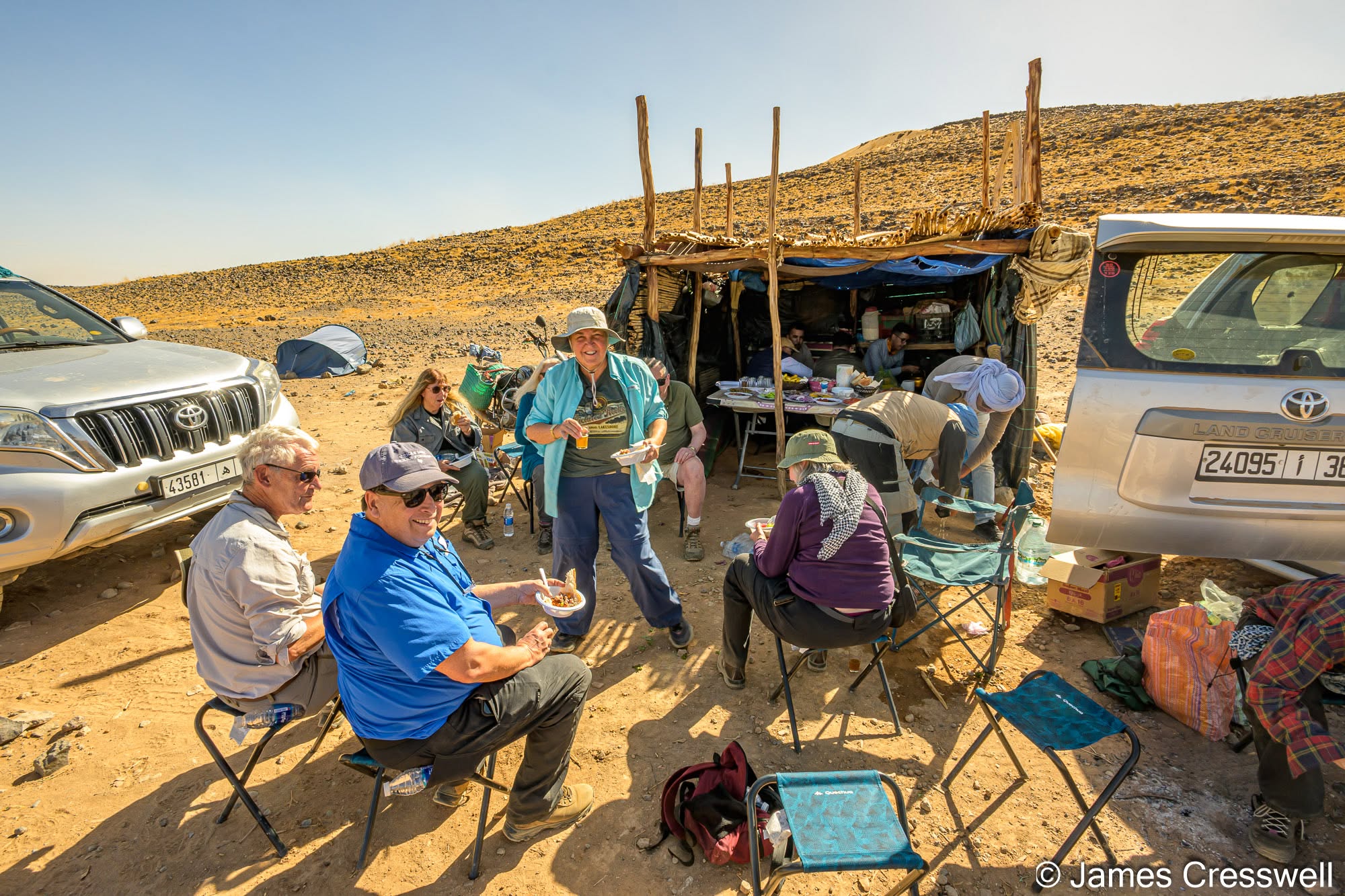
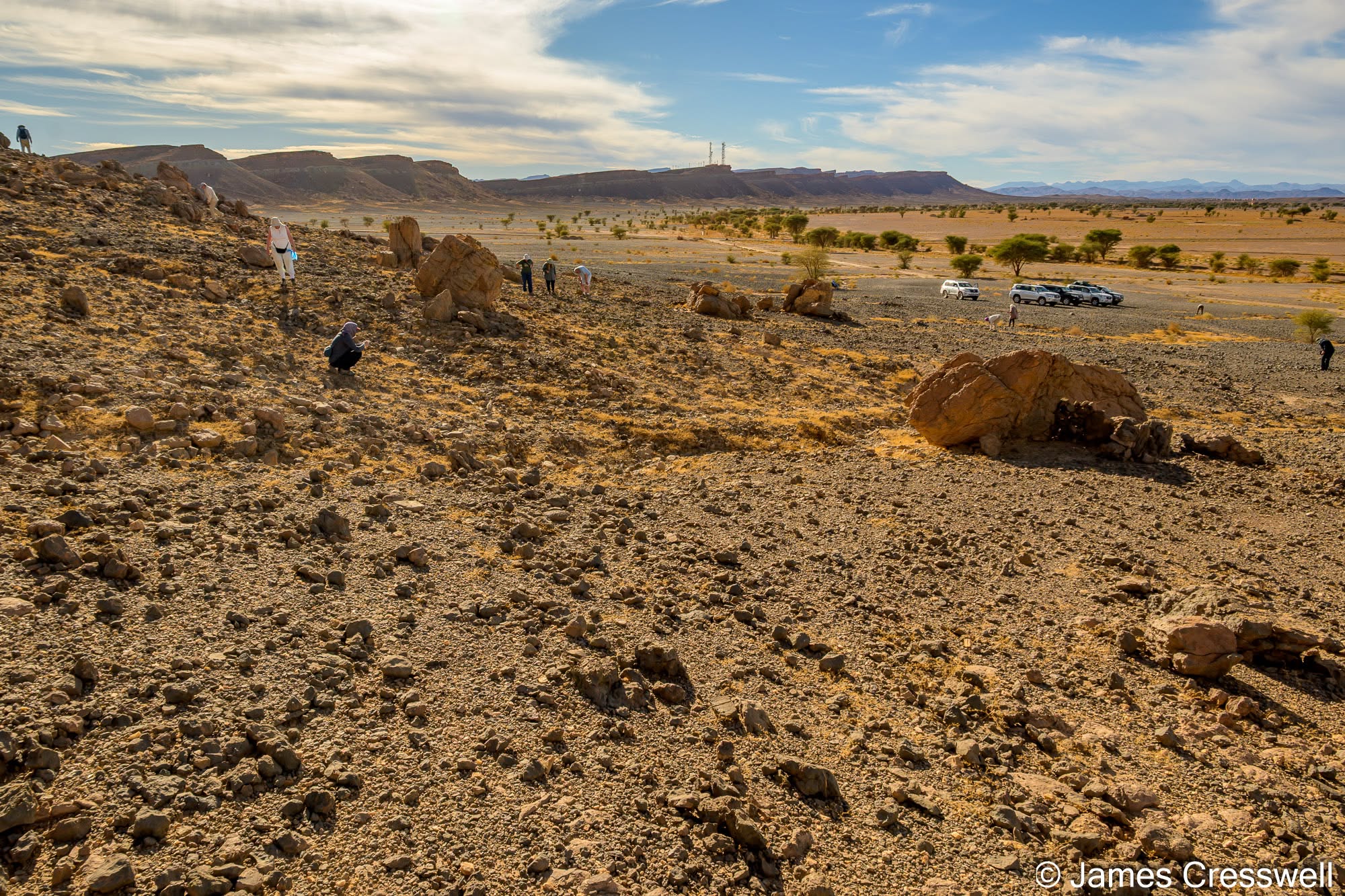
Top Left: The GeoWorld Travel group have a picnic lunch at Salem’s camp at El Atchana.
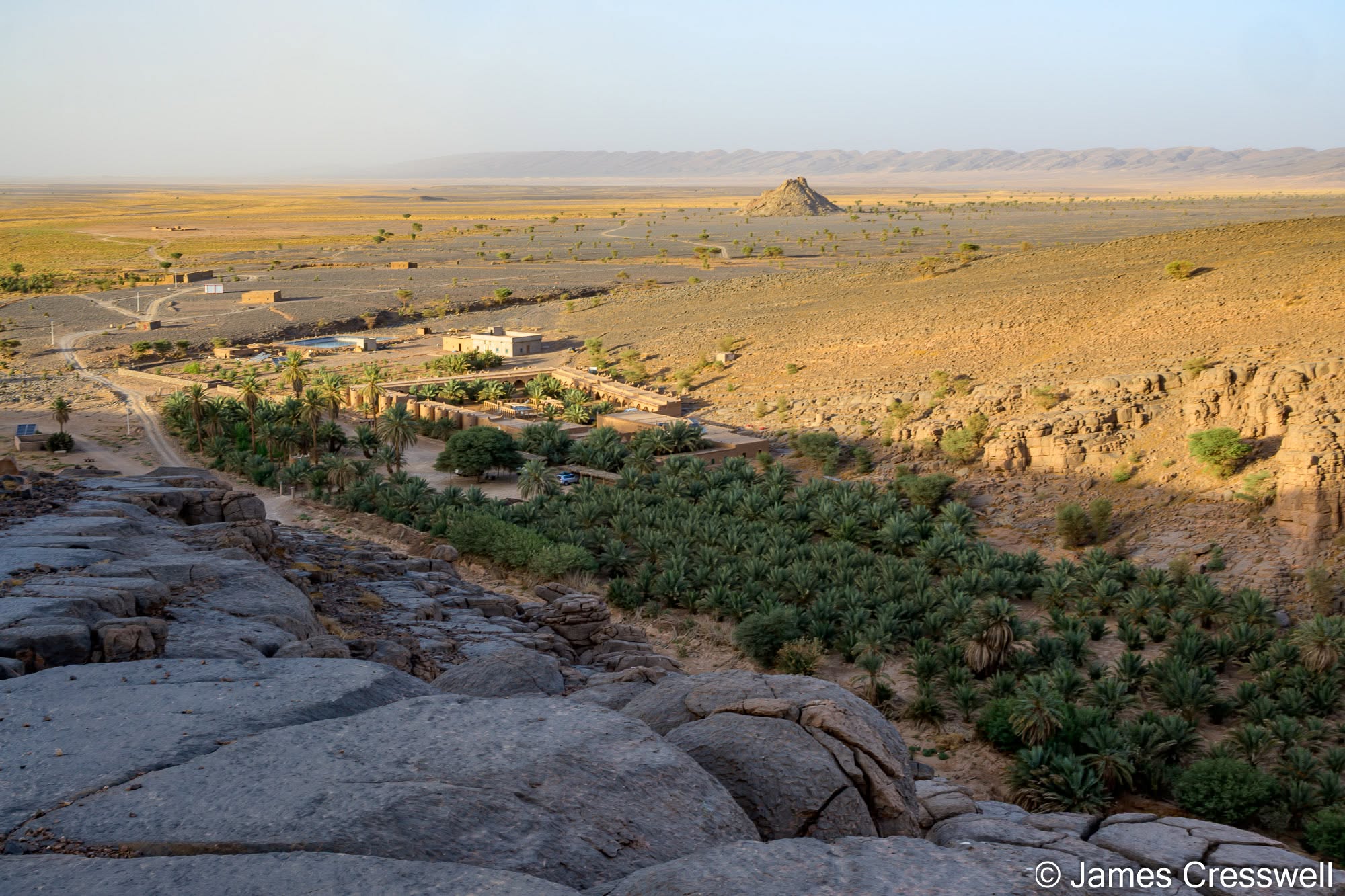
Middle Left: View over Mherch, a desert oasis and our most remote stop on the tour. Our hotel is in the centre of the picture and in the background is Guelb el Mherch, a 45m high hydrothermal mud mound or a bioherm, which grew in the Givetian epoch of the Devonian.
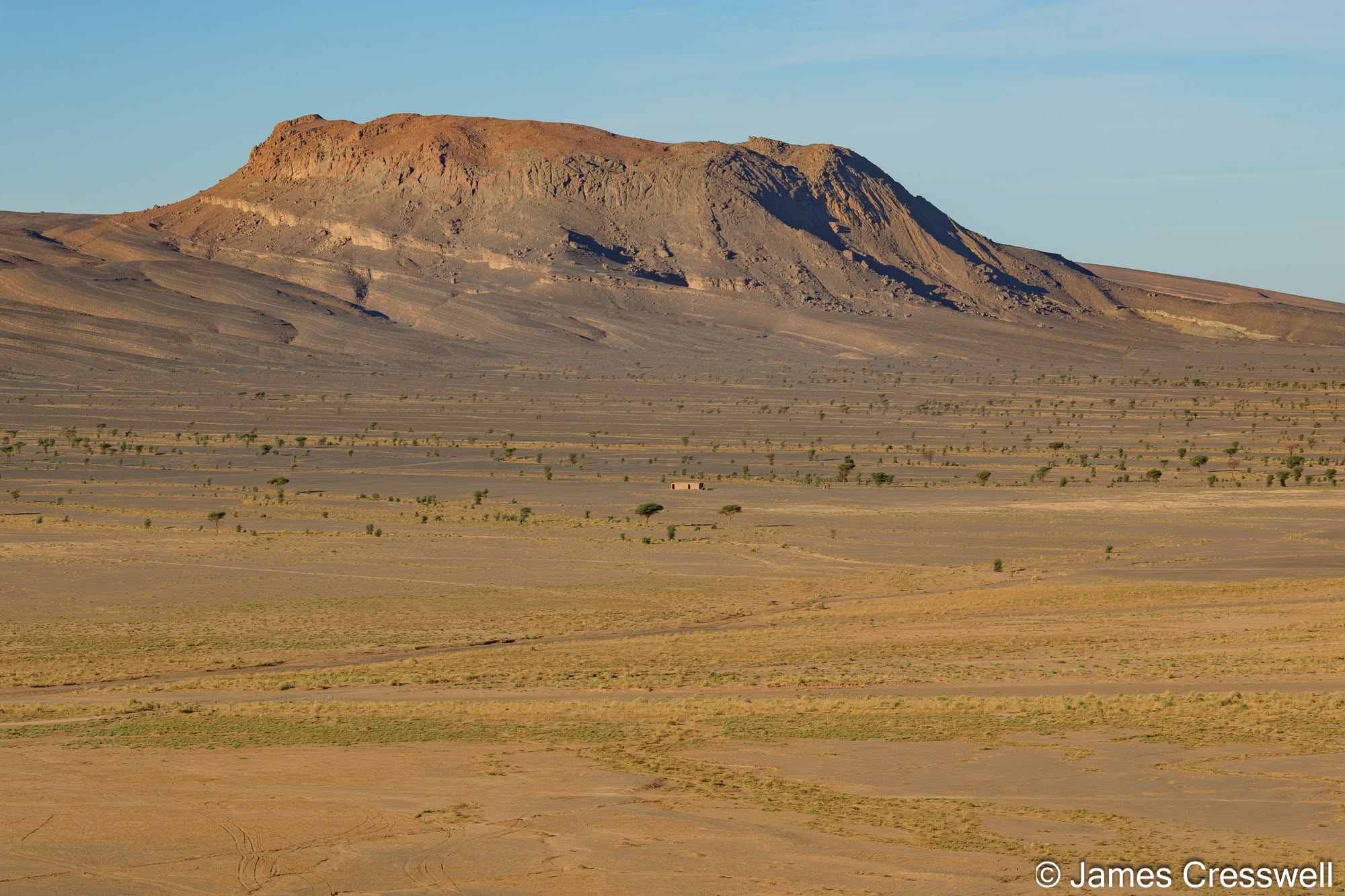
Bottom Left: Bou Dib, Jebel Issoumour. In the 1970s and 80s, Jebel Issoumour became one of the most famous places in the world for early & middle Devonian trilobites. Its notoriety began with the discovery of the oversized phacopines: Drotops. When you look at the mountain, you can see a trilobite trench stretching for several kilometres along the top of escarpment. The age of the rocks in the Bou Dib escarpment is Late Emsian–early Eifelian (Devonian). The famous trilobite horizon at Bou Dib is the Psychopyge horizon, named after the Psychopyge elegans trilobite.
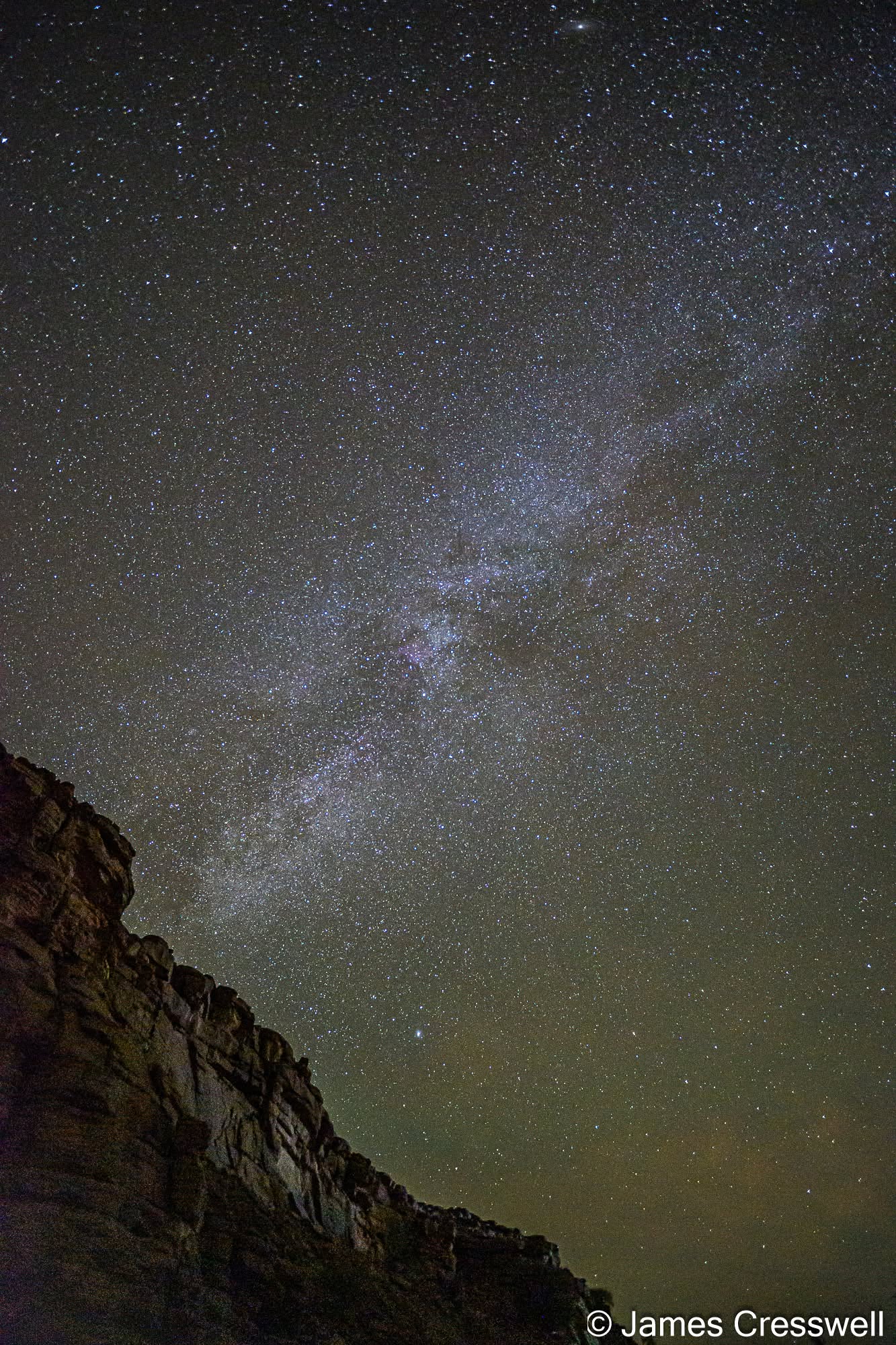
Right: Mherch is a great location for photographing the Milky Way, thanks to its remote location and lack of light pollution.
Day Six: Ancient Reefs and the Sahara
The Maider Basin revealed extraordinary Devonian geology, including Guelb el Mharch and the enormous fossil reef of Aferdou el Mrakib. After searching the desert floor for fossils, we continued to Merzouga and the towering Erg Chebbi dunes.
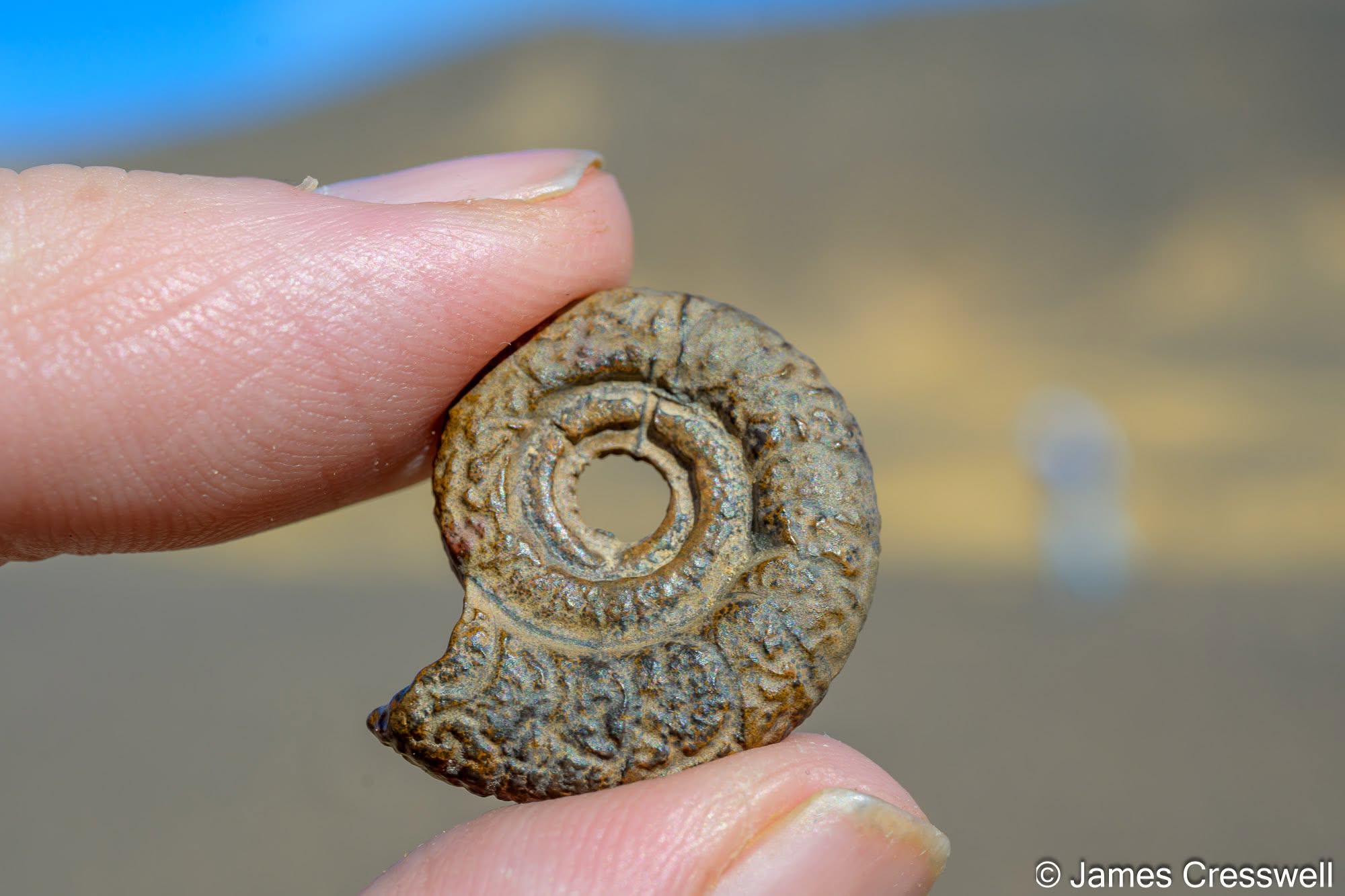
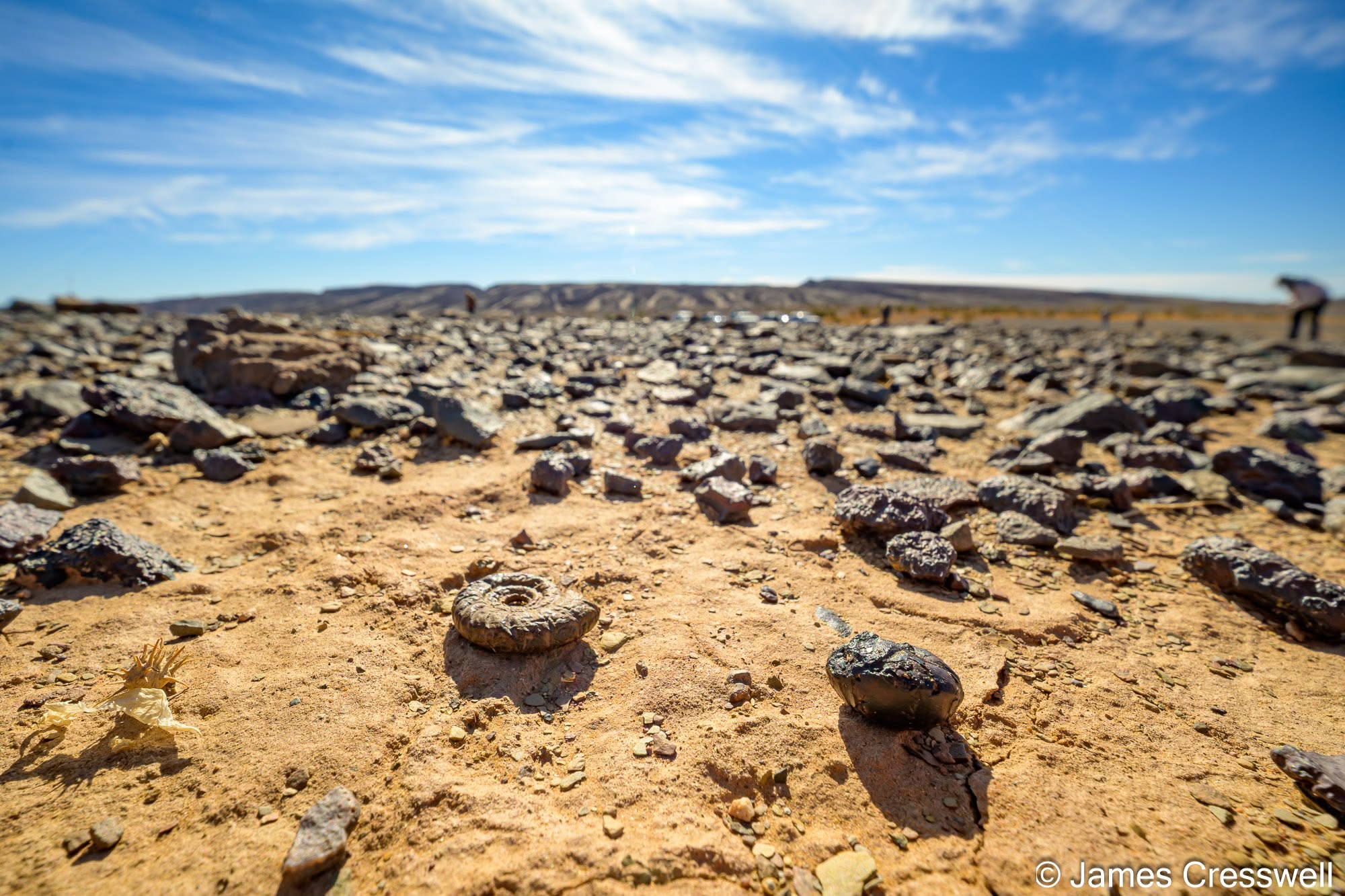
Top Left: Aferdou el Mrakib, one of the largest Devonian coral-stromatoporoid reefs in north‐western Gondwana. It is also one of the most southerly discovered shallow-water Givetian reefs. It was able to develop at a high latitude due to a very warm Devonian climate and a paleogeographic configuration that led to the Rheic Ocean being dominated by tropical waters.
Top Right: A goniatite found lying on the desert floor at Jebel el Krabis. It is Devonian (Famennian) in age and has eroded out from hypoxic pelagic shales.
Middle Right: Devonian (Famennian) ammonoids (goniatites) can be seen loose on the desert floor at Jebel el Krabis. The Famennian ammonoids of the from the region have become world famous because they are sold in rock shops around the globe. Apart from ammonoids, the Famennian of the area is an important source for brachiopods (especially Rhynchonellids), crinoids, fossil wood, deep-water solitary Rugosa corals, loxopteriid bivalves, trilobites, conodonts, and shark teeth.
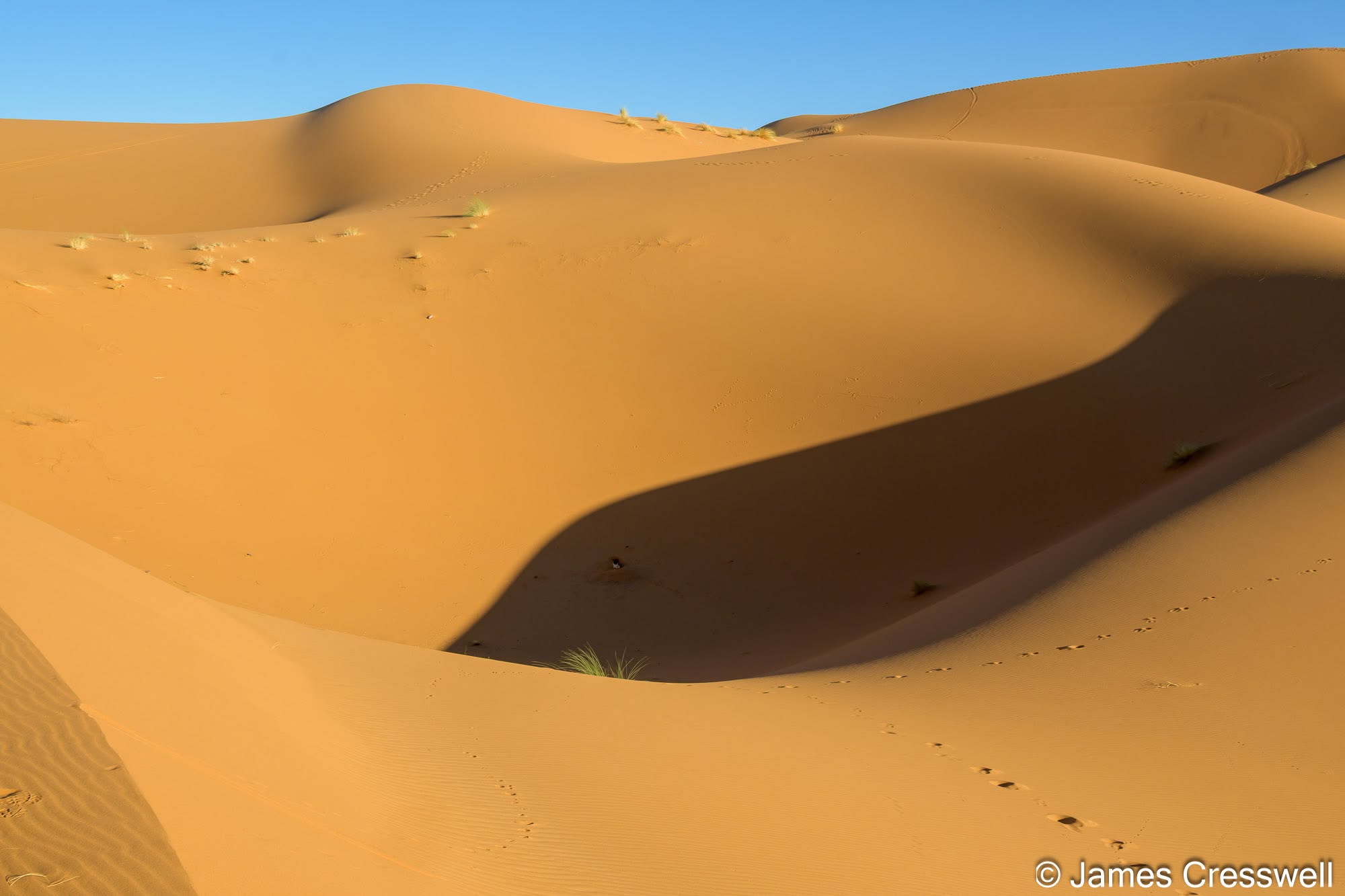
Left: Sand dunes at Erg Chebbi. An ‘erg’ is a large sea of dunes formed by wind-blown sand.
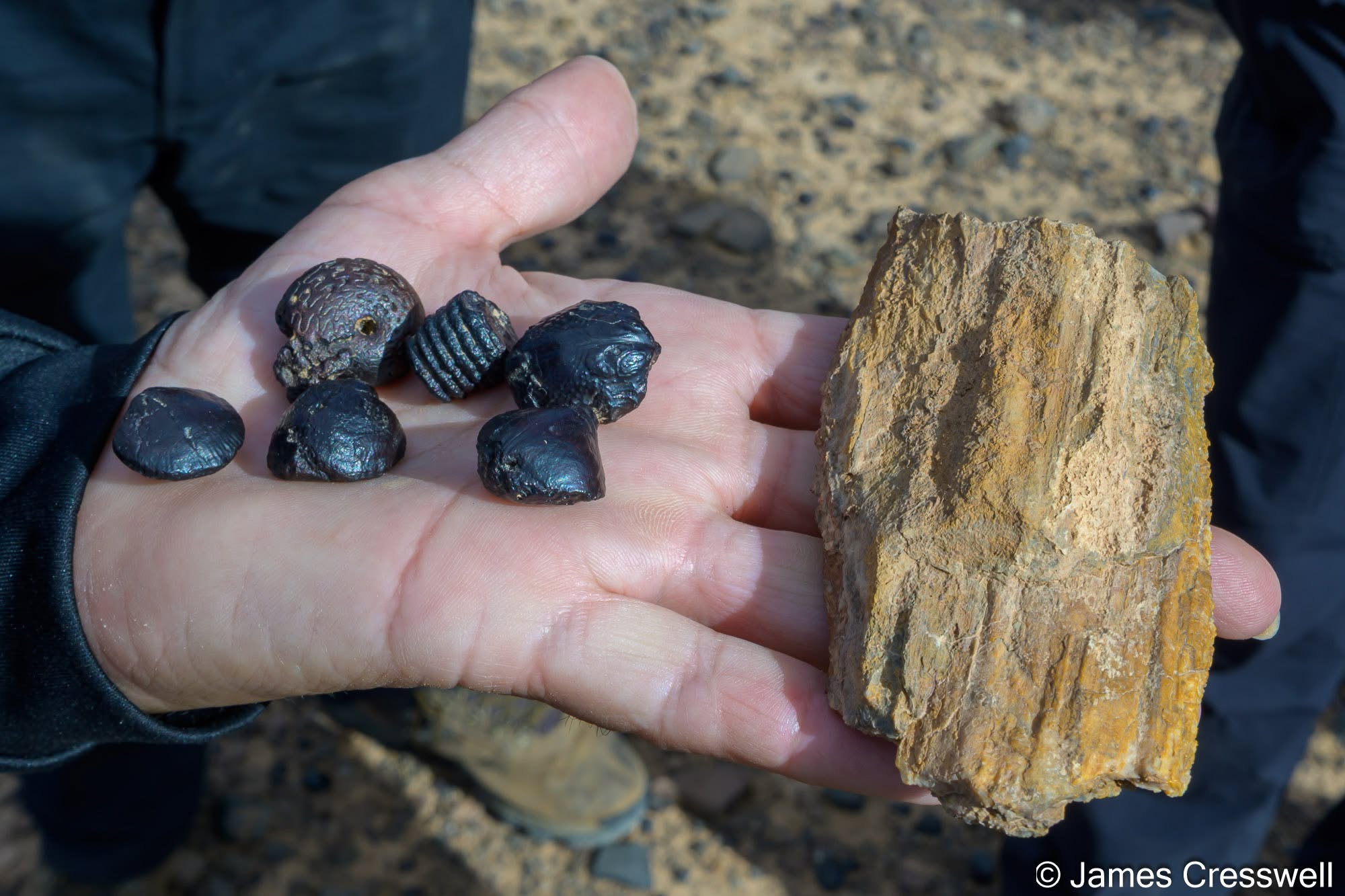
Right: A selection of fossils found at Butte 760. Loose fossils are found on the desert floor here and they are a mixed neritic-pelagic fauna (shallow and deep water). They are goethitic/haematitic and have eroded out of a hypoxic shale. The fossils are probably a mixture of several levels and consist of goniatites, orthoconic cephalopods, rare cyrtobreviconic nautiloids, abundant brachiopods, crinoid stem pieces, gastropods, bivalves and phacopid trilobites. The large piece on the right is a fragment of fossilised wood.
Day Seven: Dinosaurs, Minerals and Desert Adventure
At the famous Kem Kem beds we explored rocks deposited by an enormous Cretaceous river system and searched for evidence of animals including Spinosaurus and Carcharodontosaurus. Later, we headed underground at the Filon 12 mineral mine before returning to Merzouga.
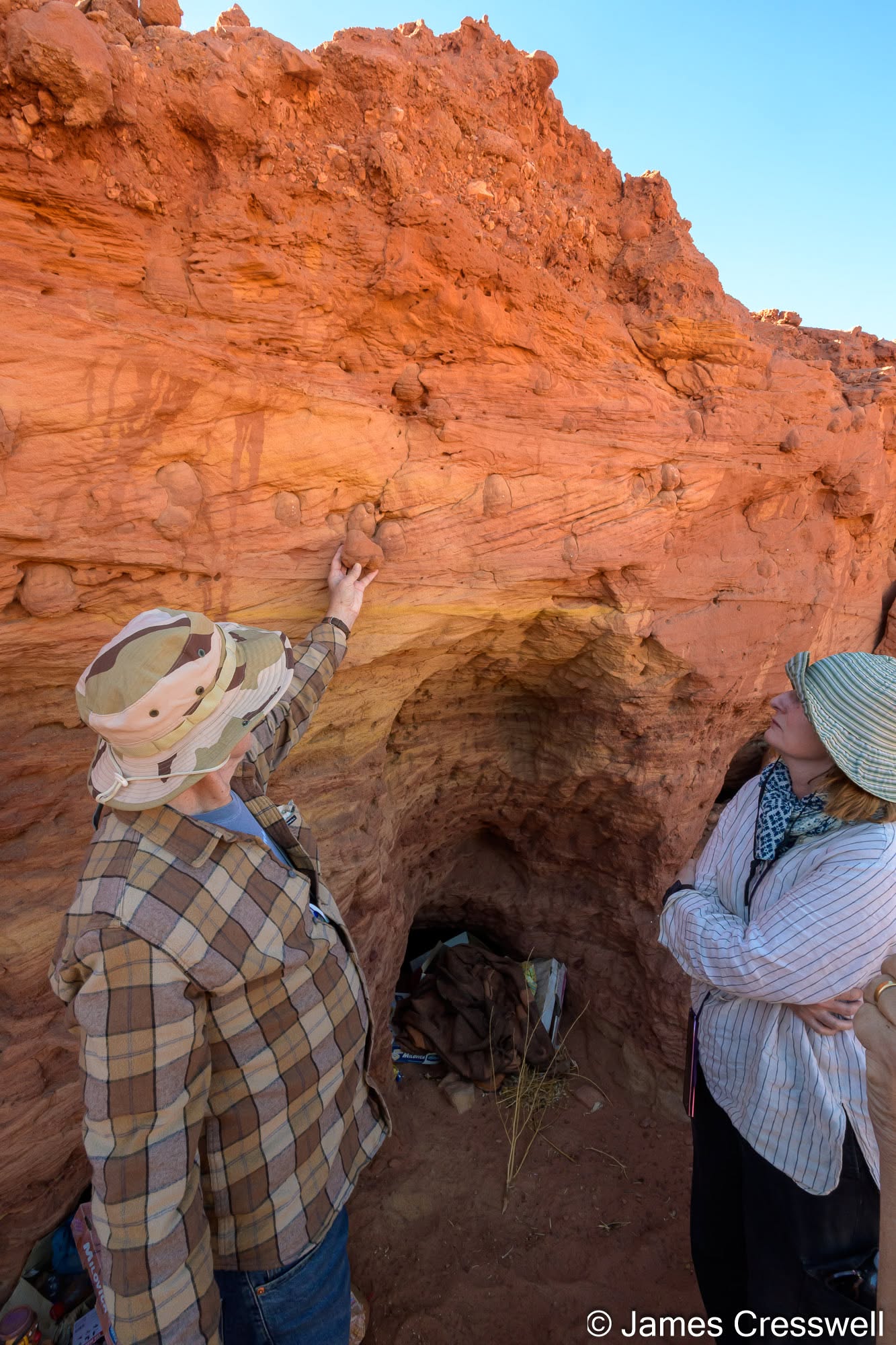
Left: At the Kem Kem dinosaur beds, Ted demonstrates that so-called ‘stromatolites’ are in fact just nodules and cannot be stromatolites as the bedding structures pass through them.
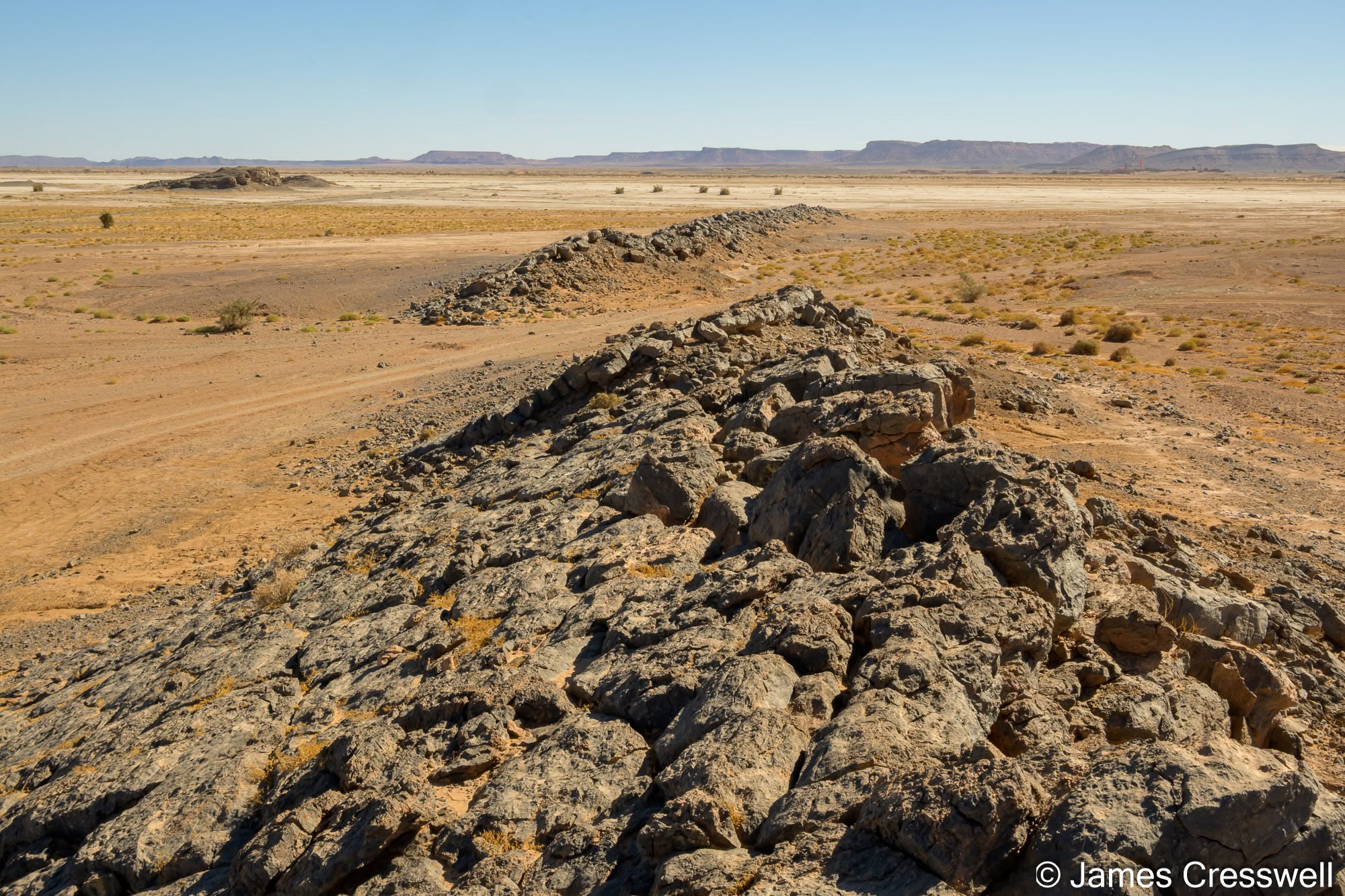
Right: An outcrop of Silurian (Ludlow) Orthoceras near to Taouz. The line of the outcrop is offset by a fault, with a track passing through the gap it has created.
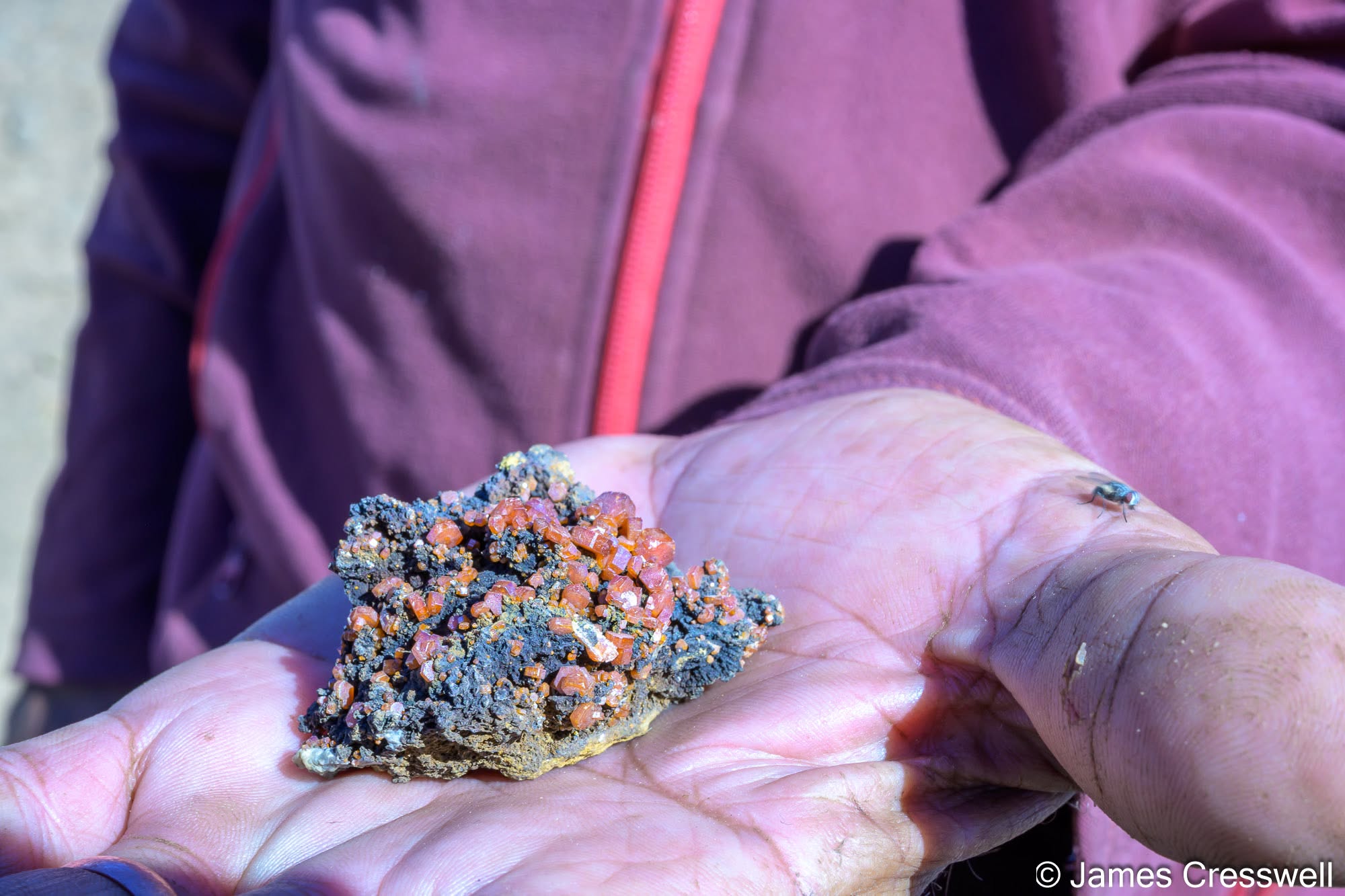
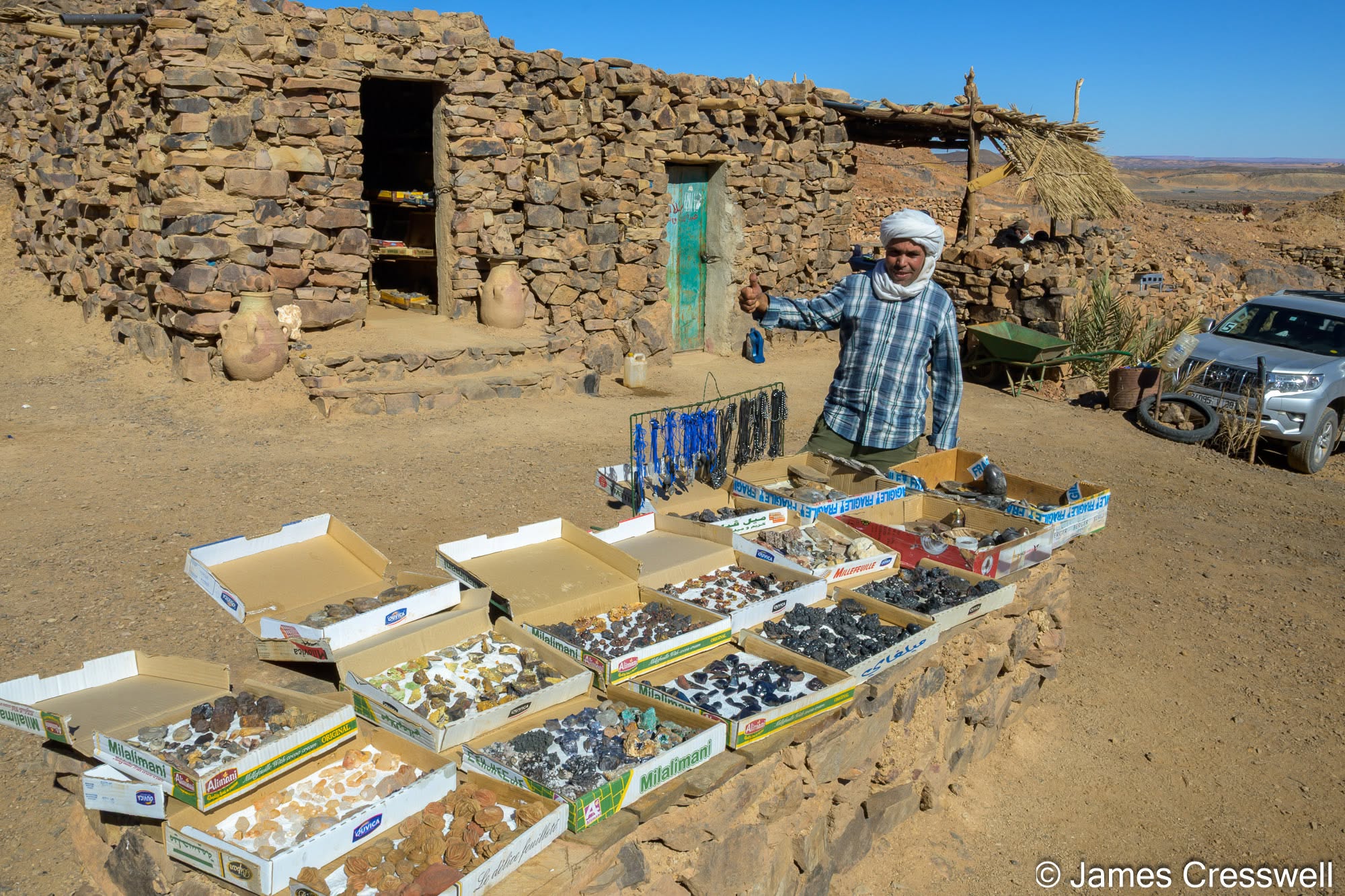
Left: A sample of Vanadinite from Filon 12 Mineral Mine. Filon 12 started life as a haematite mine, but it is now a mine solely for mineralogical specimens. Other minerals found here include goethite and haematite.
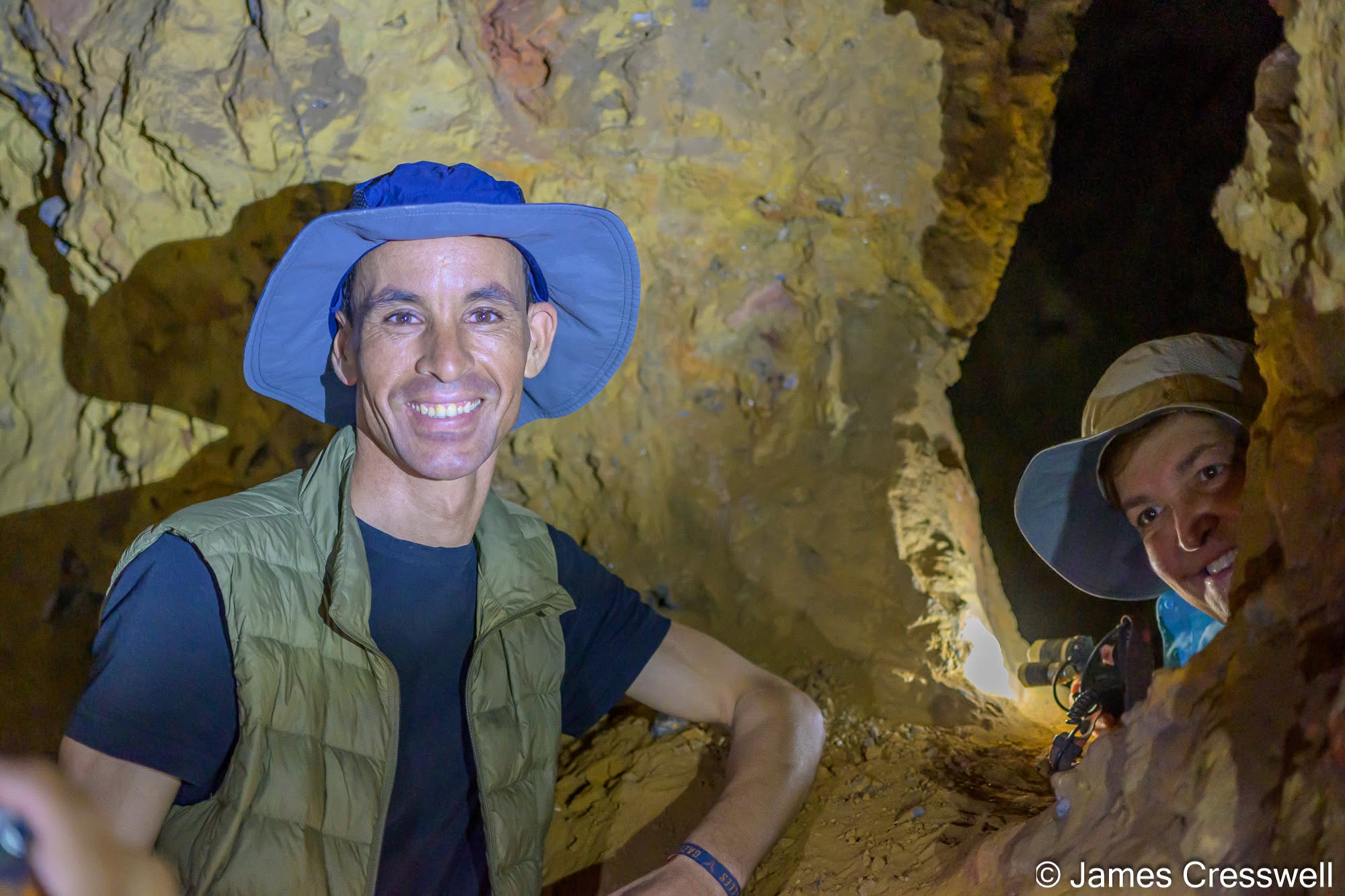
Top right: Moha in the Filon 12 Mineral Mine, with Linda peeking around the corner!
Bottom right: Ali at the Filon 12 Mineral Mine with some of his specimens for sale.
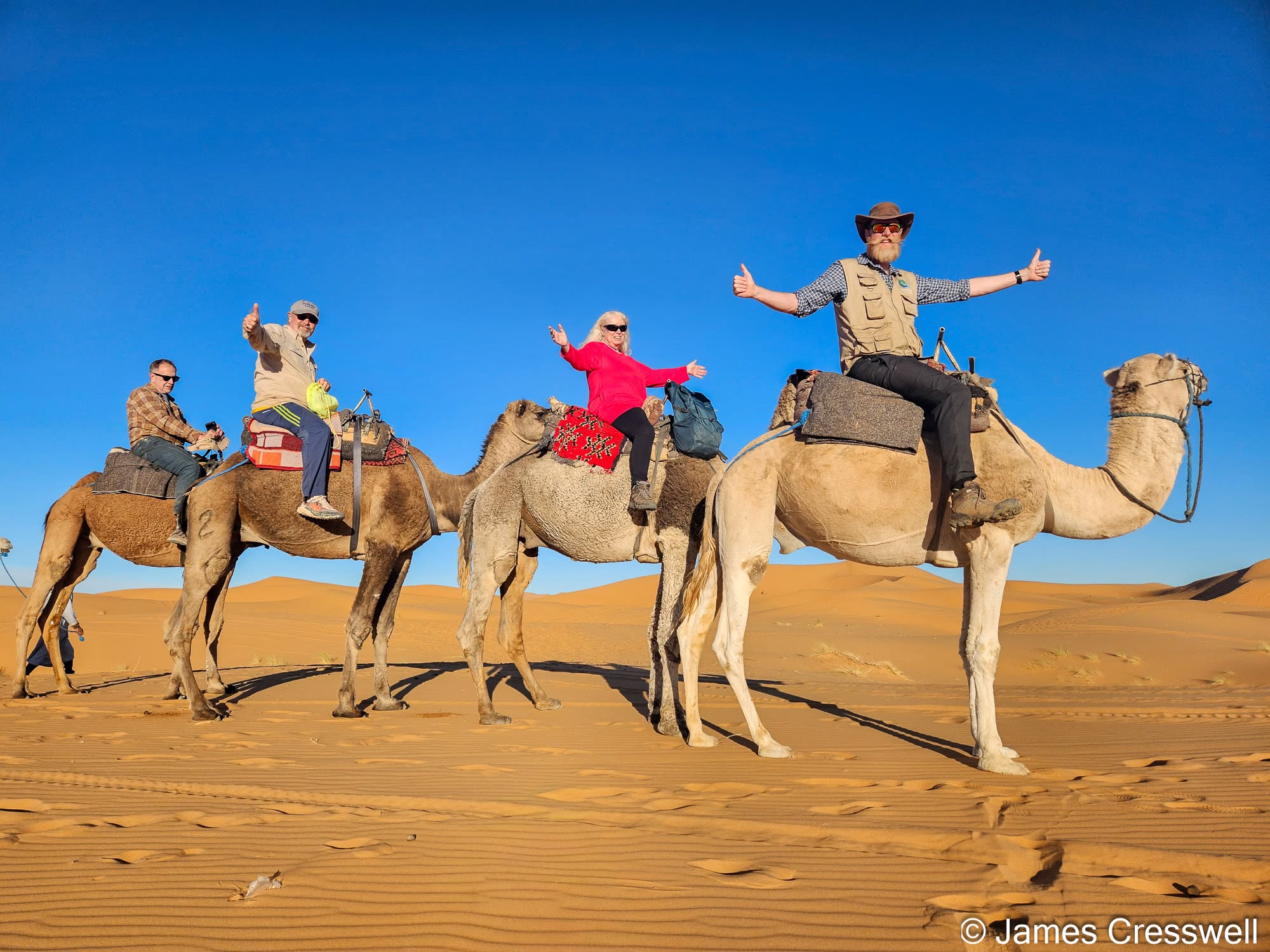
Left: James and some of the GeoWorld Travel guests enjoying a camel ride in the Erg Chebbi dunes.
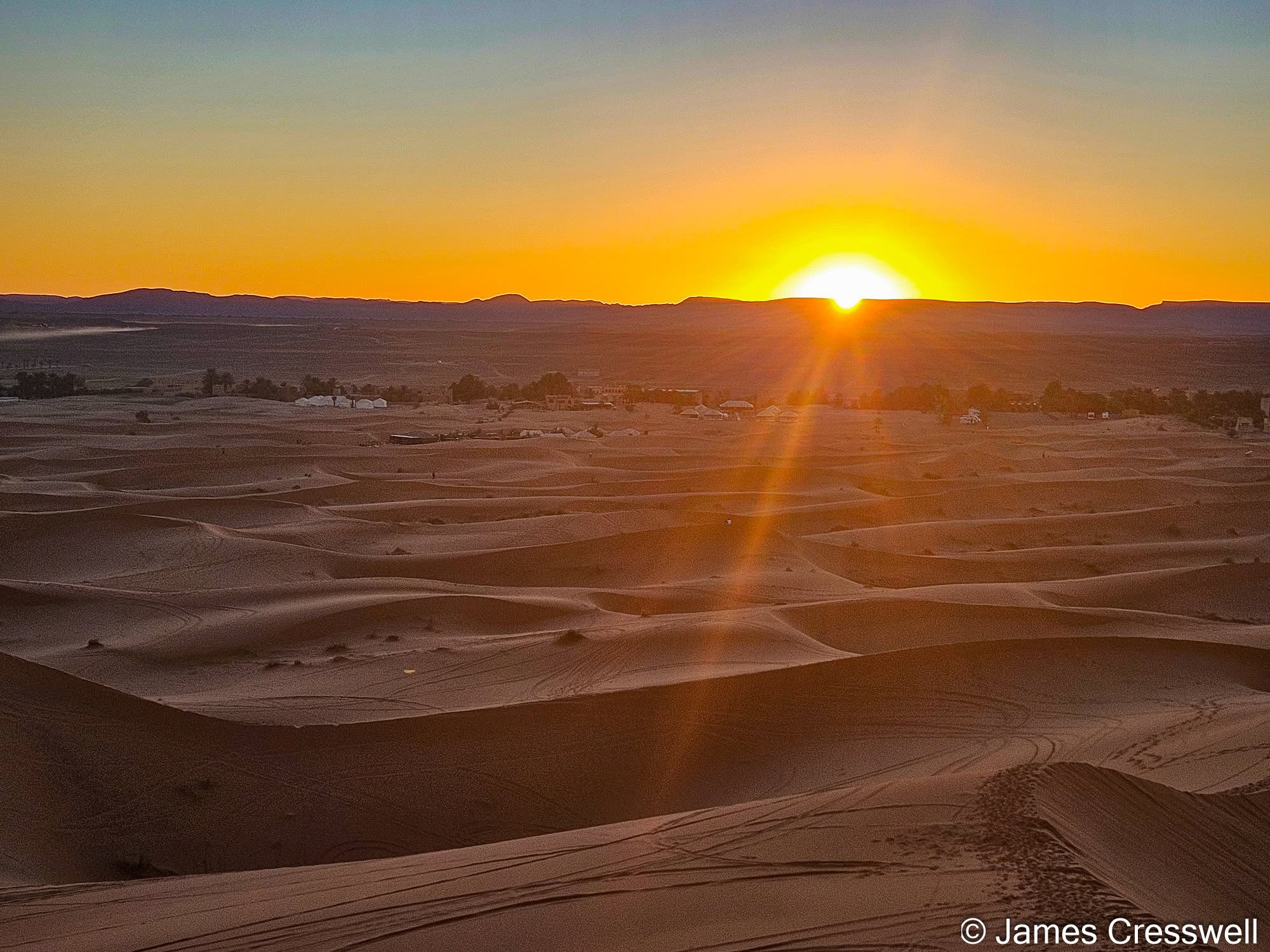
Top Right: The sun setting over the Erg Chebbi dunes of the Sahara Desert, near Merzouga.
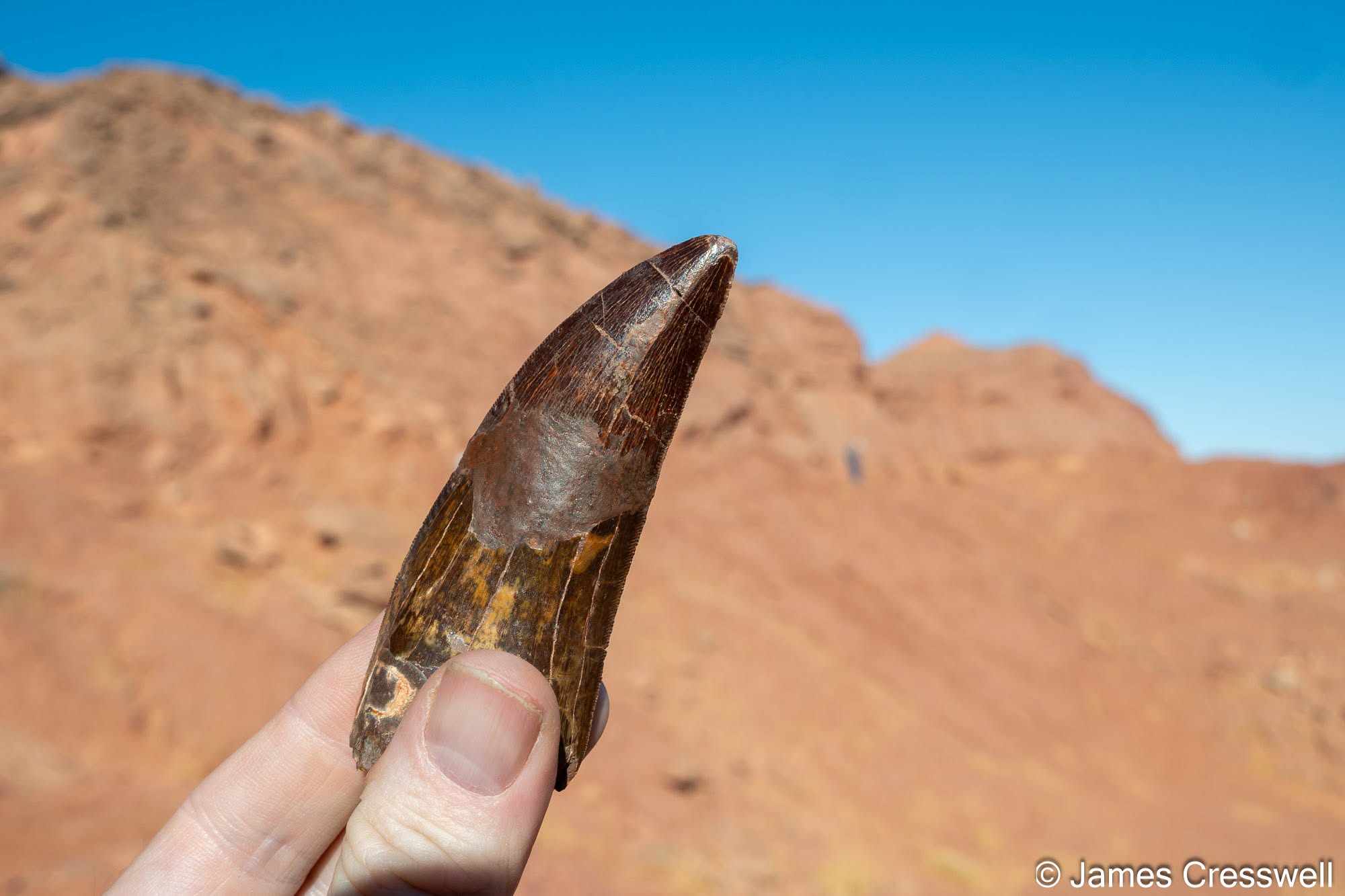
Bottom Right: A Carcharodontosaurus tooth which was found in the Kem Kem dinosaur beds near Begaa. These beds date to the Cenomanian (100ma) of the Upper Cretaceous and have revealed over 80 vertebrate taxa including dinosaurs, crocodiles, pterosaurs, scherorhynchid sharks, lung fish, bony fish, turtles, snakes, lizards, amphibians and, found in 2022, freshwater plesiosaurs. Predatory dinosaurs found in the Kem Kem include Carcharodontosaurus, Deltadromeous and, most famously, Spinosaurus. Spinosaurus teeth are also abundant at the site.
Day Eight: Fossils and the Eastern High Atlas
Beginning among the remarkable Kes Kes carbonate mounds, we visited orthoceras and crinoid workings around Erfoud before travelling north through the dramatic geology of the eastern High Atlas Mountains.
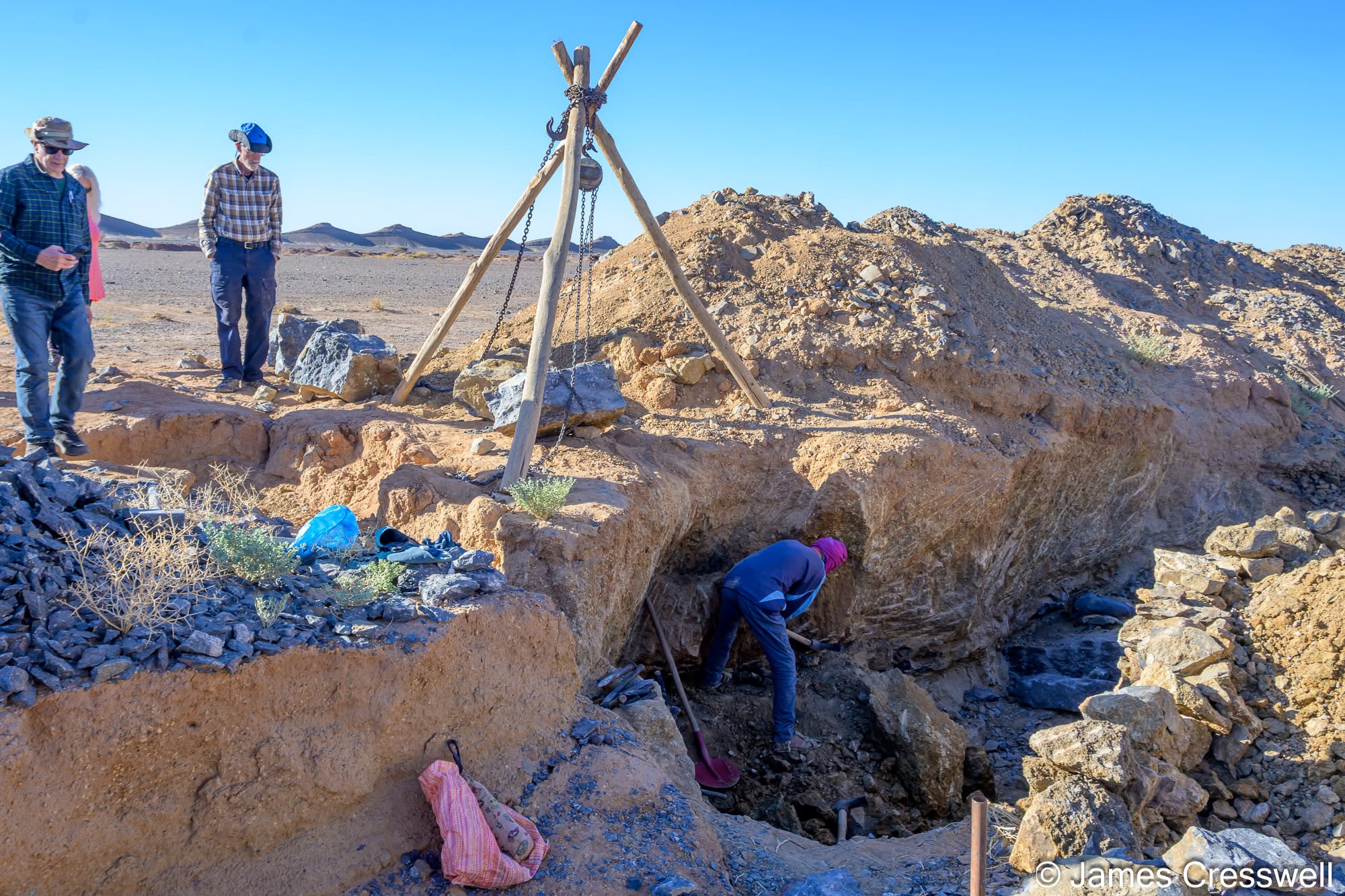
Left: A fossil miner digging out orthoceras limestone at a quarry near Erfoud.
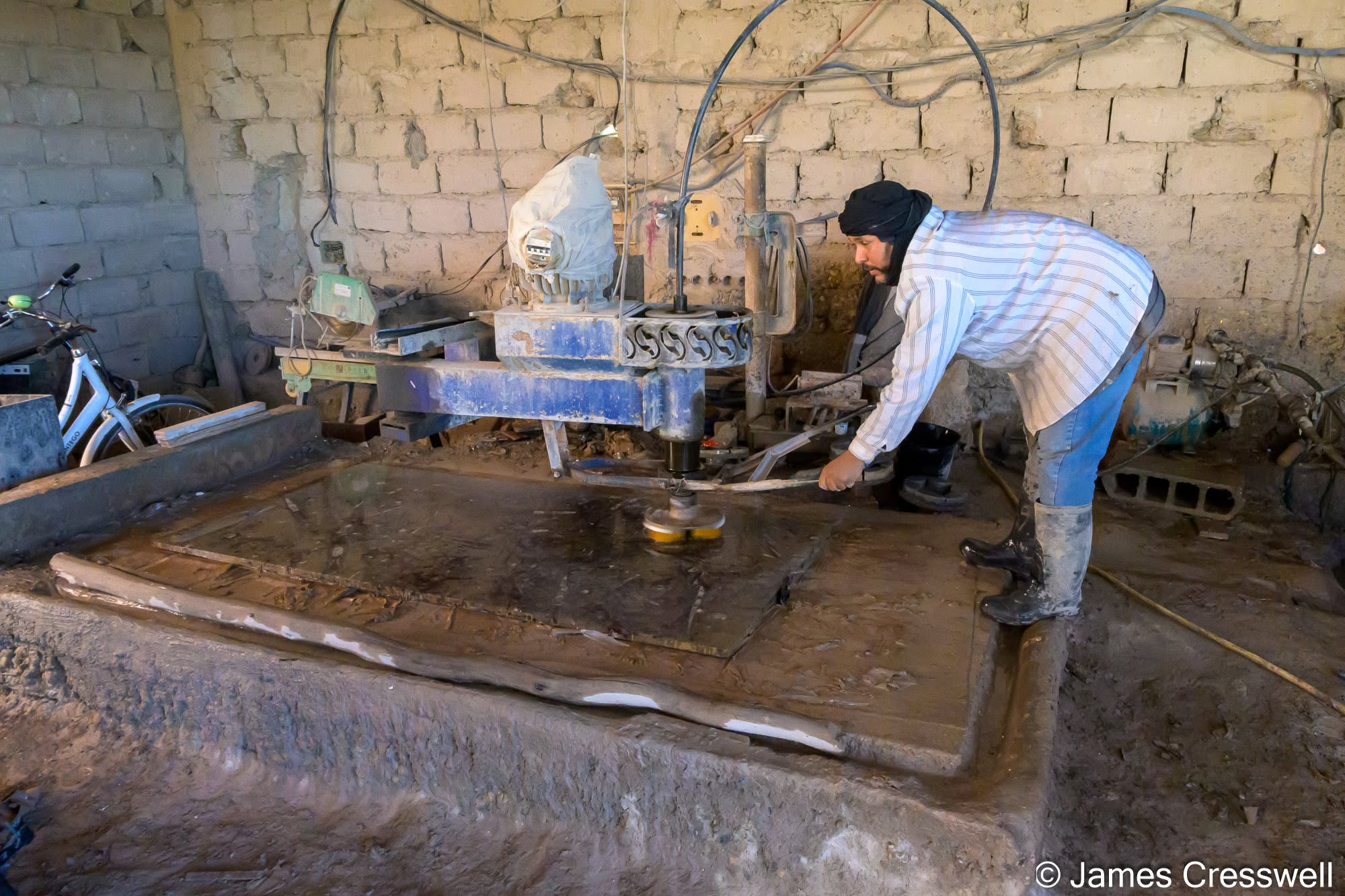
Top right: Preparing a sheet of orthoceras limestone to be made into a tabletop at an Orthoceras factory in Erfoud. At the factory, orthoceras limestone is made into plates, tables, basins and much more.
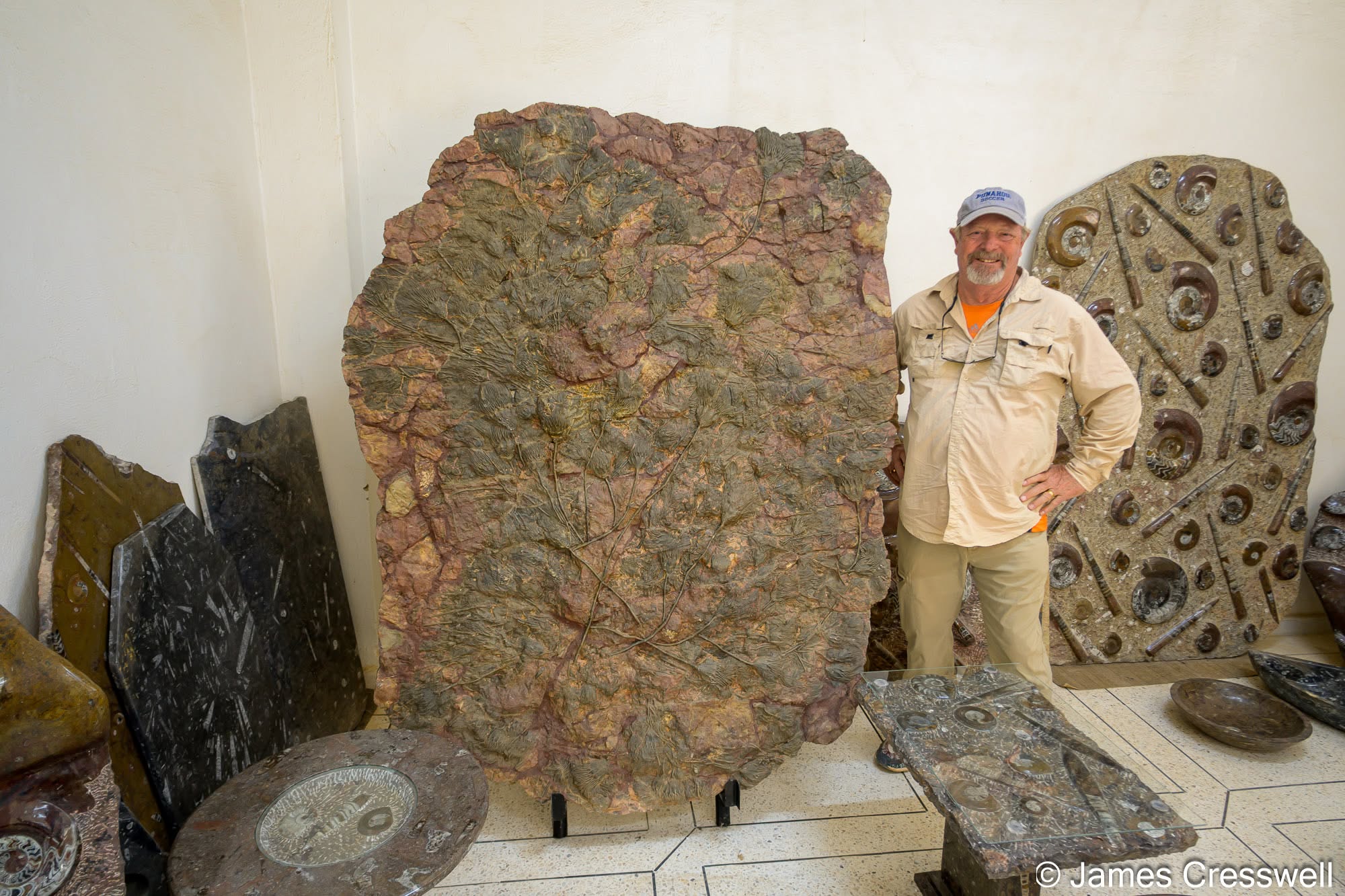
Bottom right: Sandy with a large crinoid specimen for sale in the Orthoceras factory shop at Erfoud. These Silurian crinoids are mined nearby.
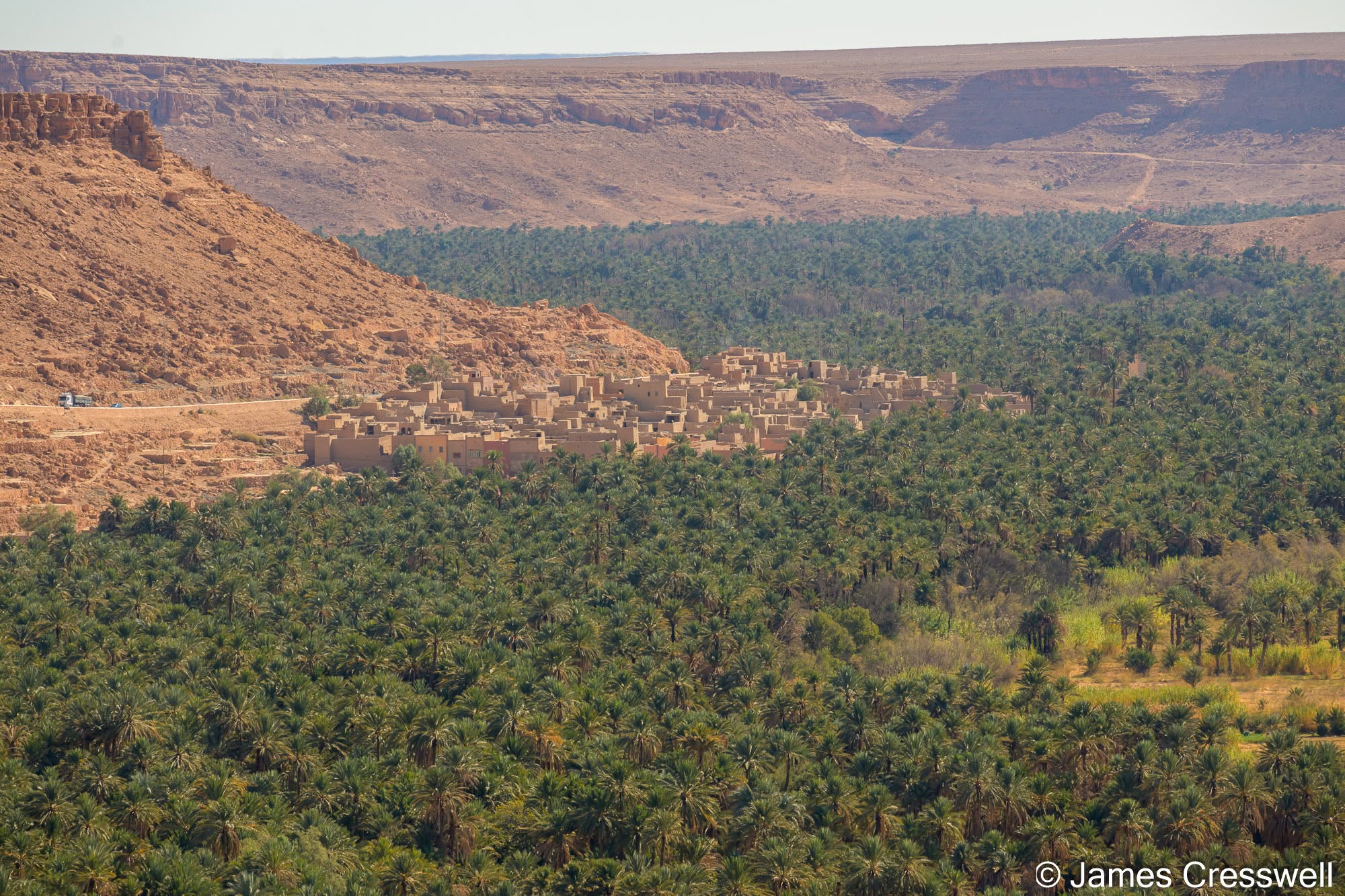
Left: The oasis of the Ziz valley is carved into a desert limestone plateau. The green palm trees contrast dramatically with the aridity of the desert.
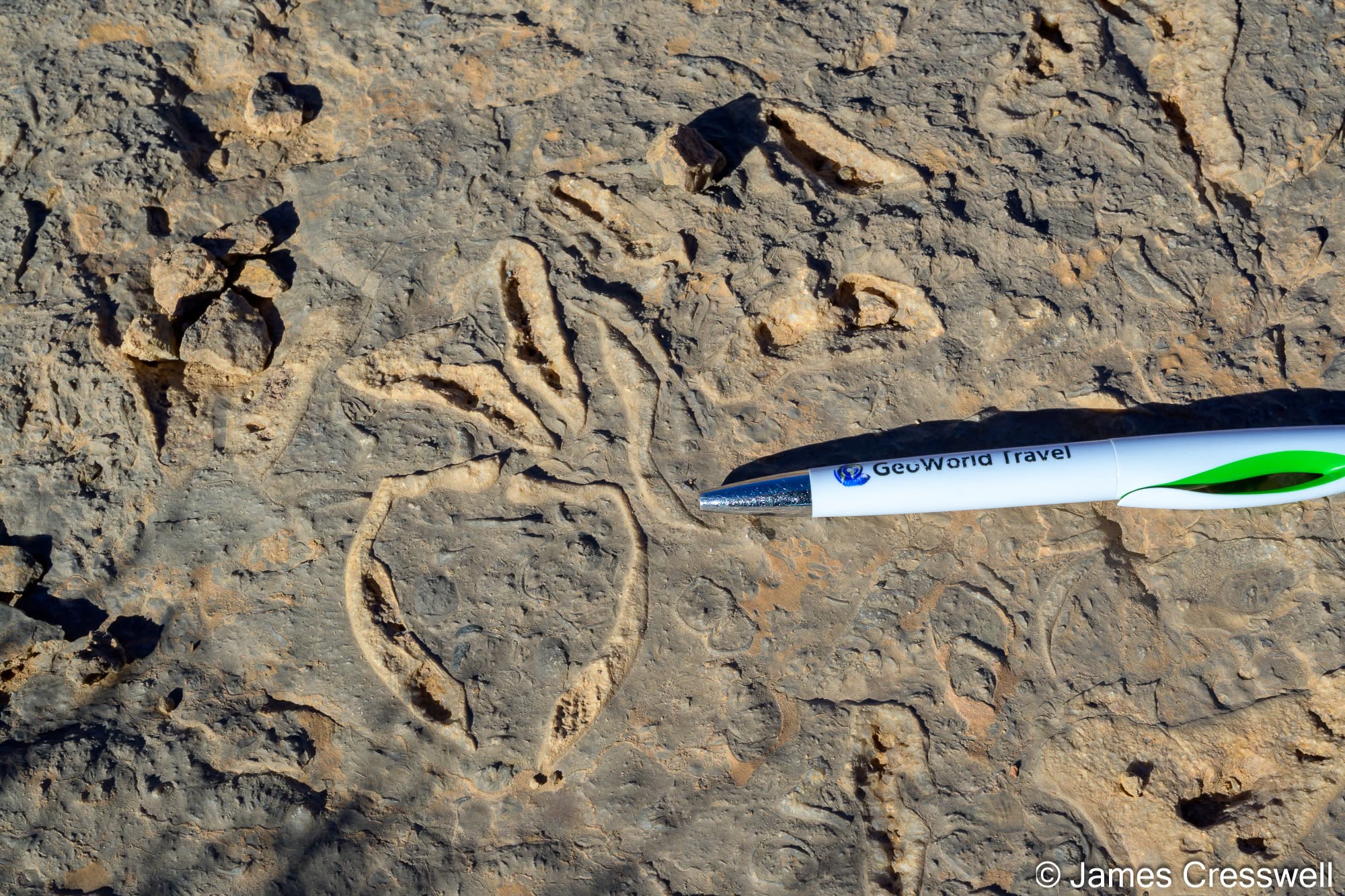
Right: A megalodontid bivalve fossil in a Jurassic (Pliensbachian) aged biostrome at Ait Atmane. A biostrome is a laterally extensive, bed-like (sheet-like) accumulation of fossils within a sedimentary rock layer, typically formed by organisms such as corals, stromatolites, bivalves, or other marine life.
Day Nine: Dinosaur Tracks in the M’Goun Geopark
Our journey brought us into the M’Goun Geopark, where the geology was joined by another highlight: dinosaur footprints. Near Bin el Ouidane we encountered trackways left behind by theropod and sauropod dinosaurs.
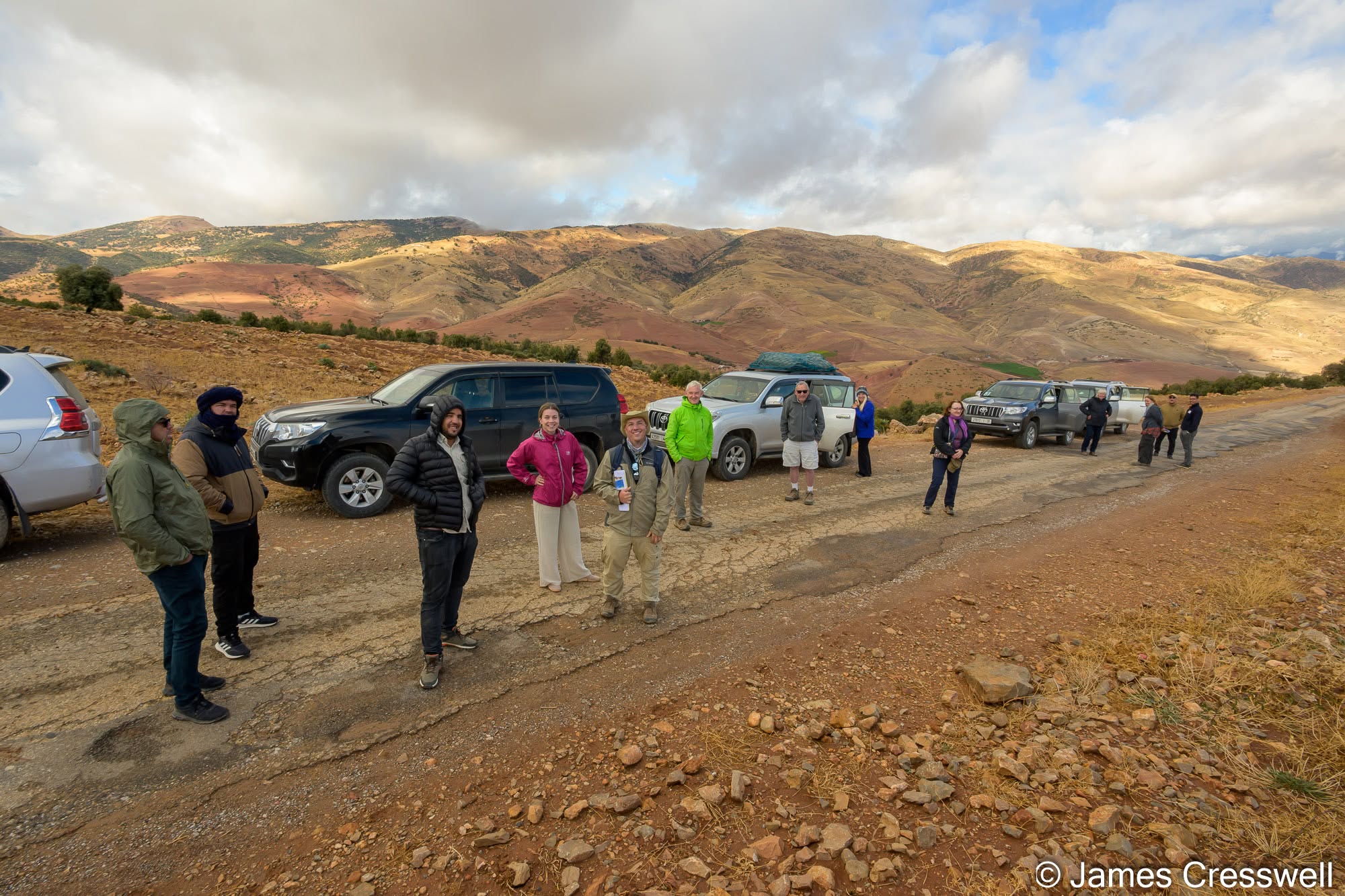
Left: The GeoWorld Travel group at the point where the Middle and High Atlas Mountains meet, near to village of Naour. The group are standing in the High Atlas Mountains, but behind the group, across the valley on the other side of a major fault, are the Middle Atlas Mountains.
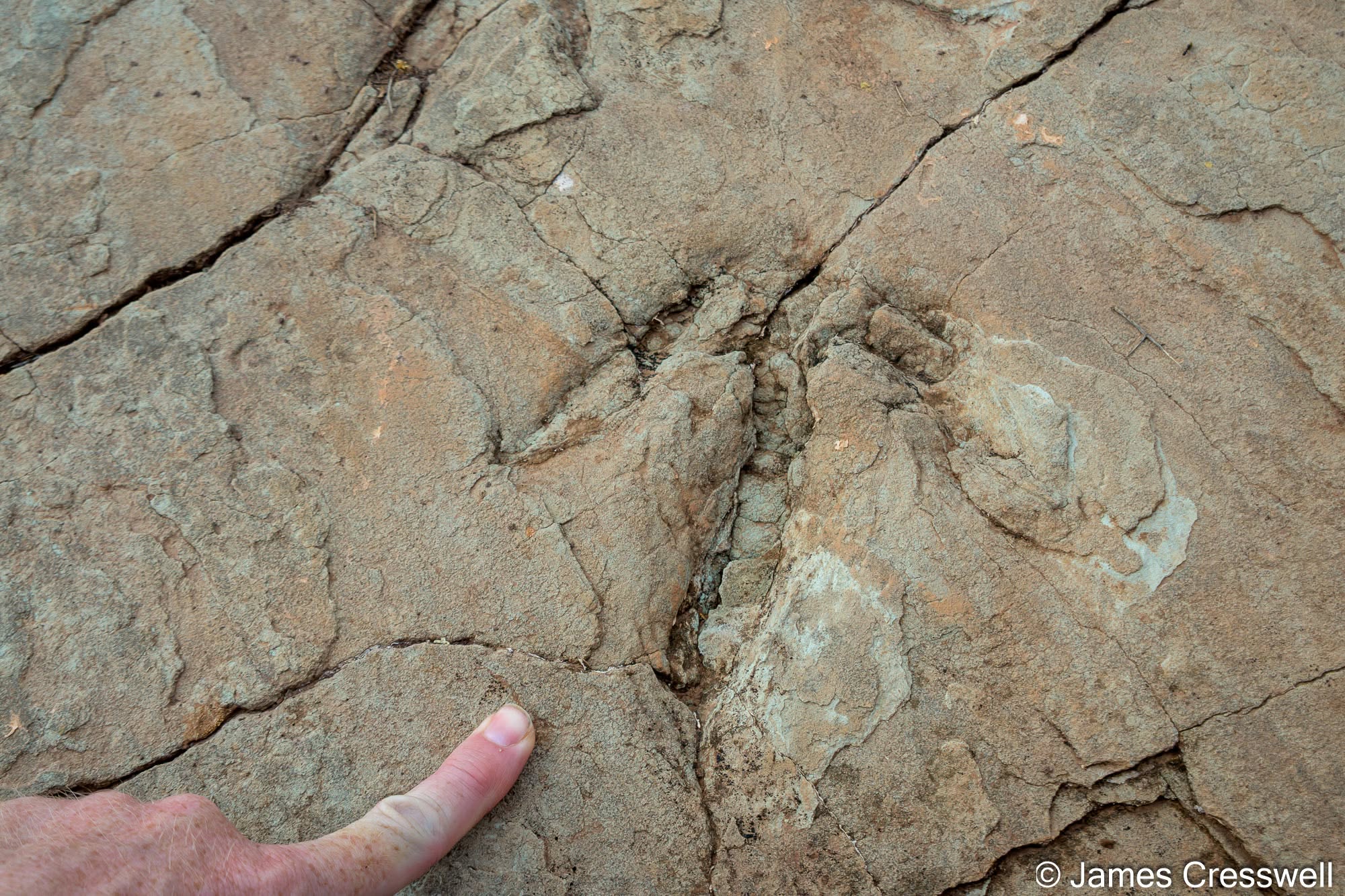
Top Right: A dinosaur footprint at the Bin El Ouidane track site. A famous site in the Tilouguite Formation silt beds (Bathonian-age, 165 Ma) with tracks of both Theropod and Sauropod dinosaurs. On a whitish silt bed, there are four theropod footprints and these tridactyl footprints are attributed to small-sized Saurischian dinosaurs.
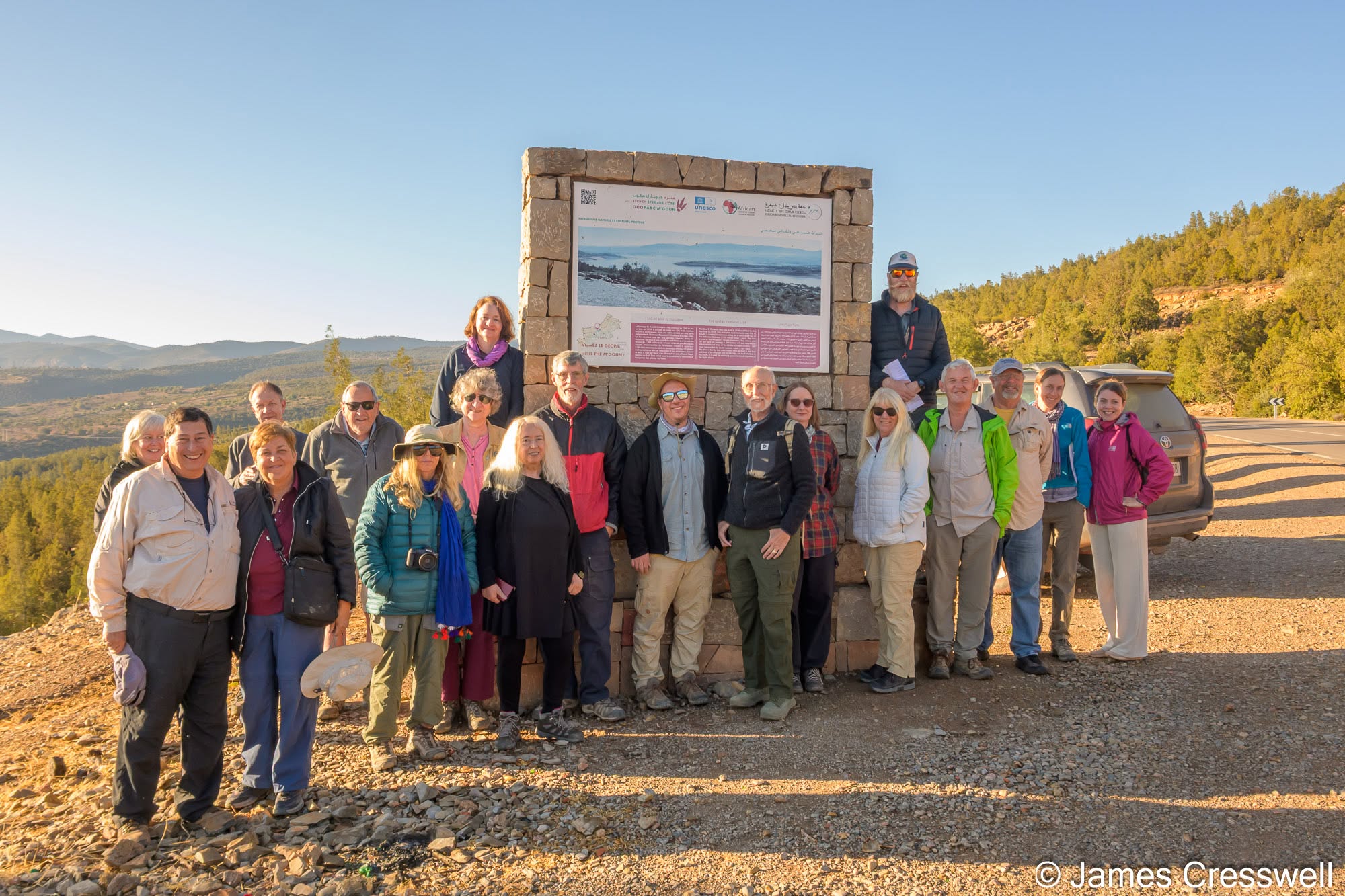
Bottom Right: The GeoWorld Travel group at the entrance to the M’Goun UNESCO & Regional Geopark, which was the first UNESCO Geopark to be created in Africa.
Day Ten: Dinosaurs of the M’Goun Geopark
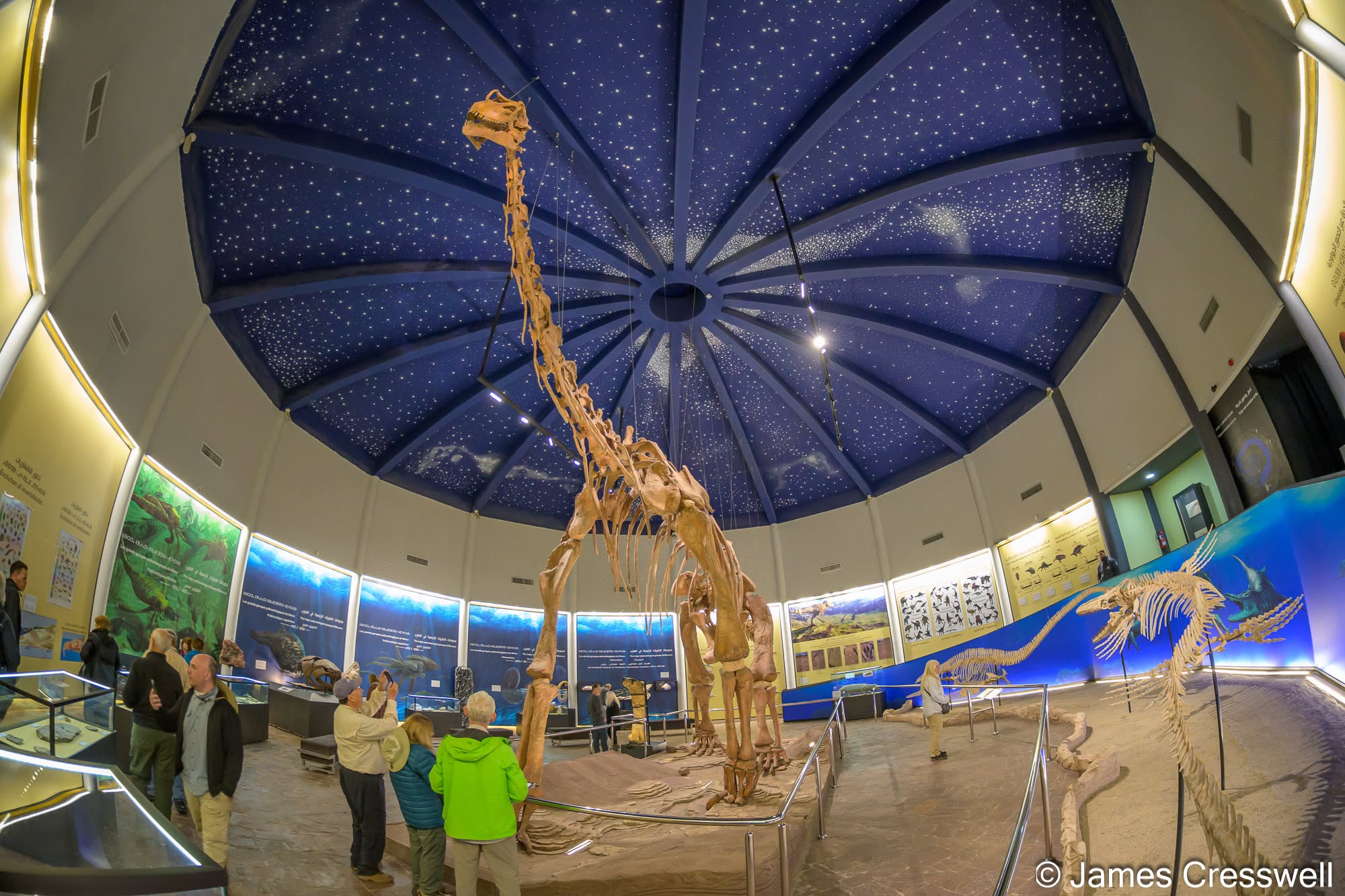
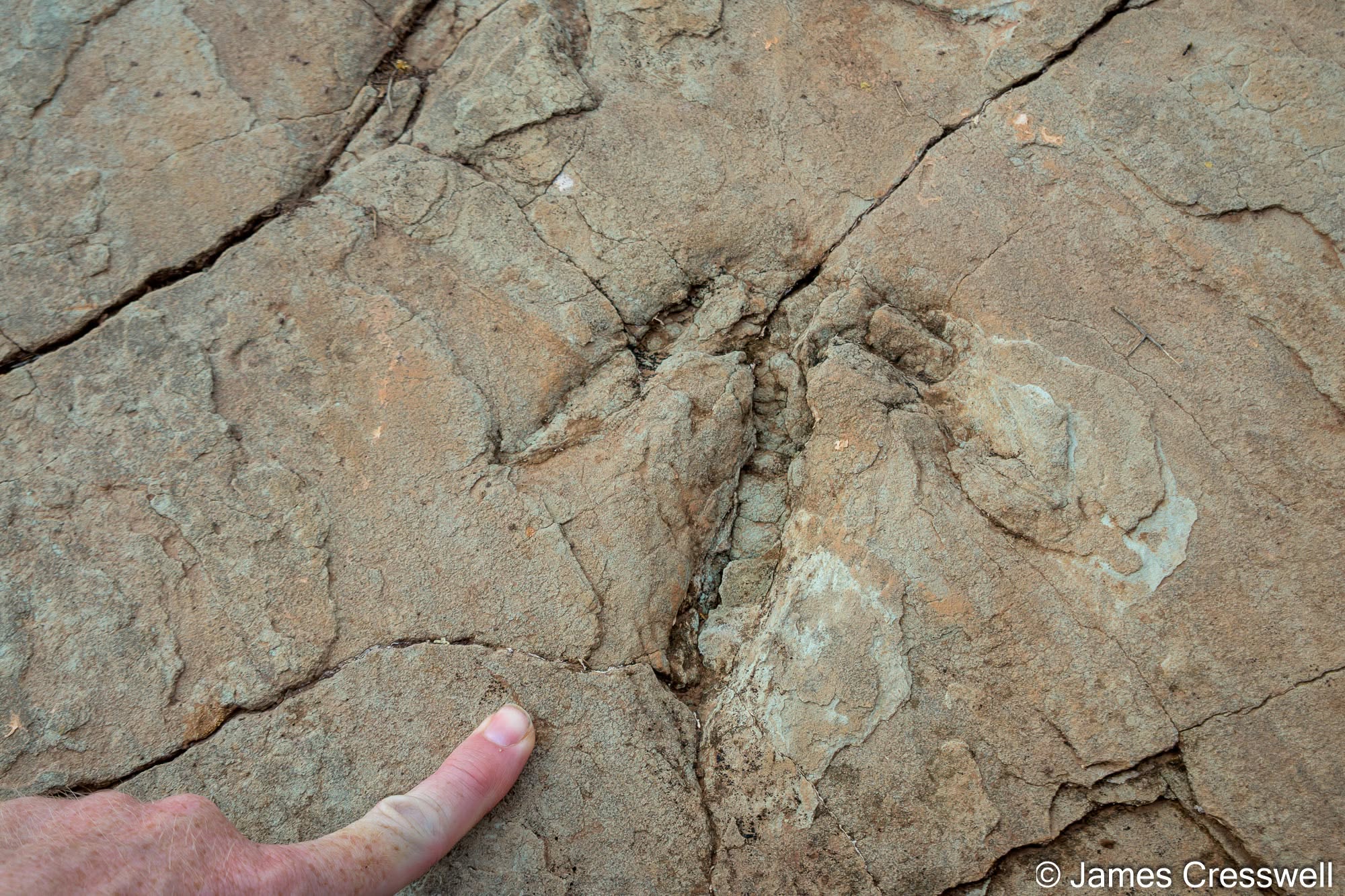
Our final full day included the Azilal Museum and its Atlasaurus imelakei, followed by the extraordinary Iroutlane-Iwariden tracksite, where more than a thousand dinosaur footprints occur across several sites. After one final geological stop at the Imnifri Natural Bridge, we returned to Marrakech for our farewell dinner.
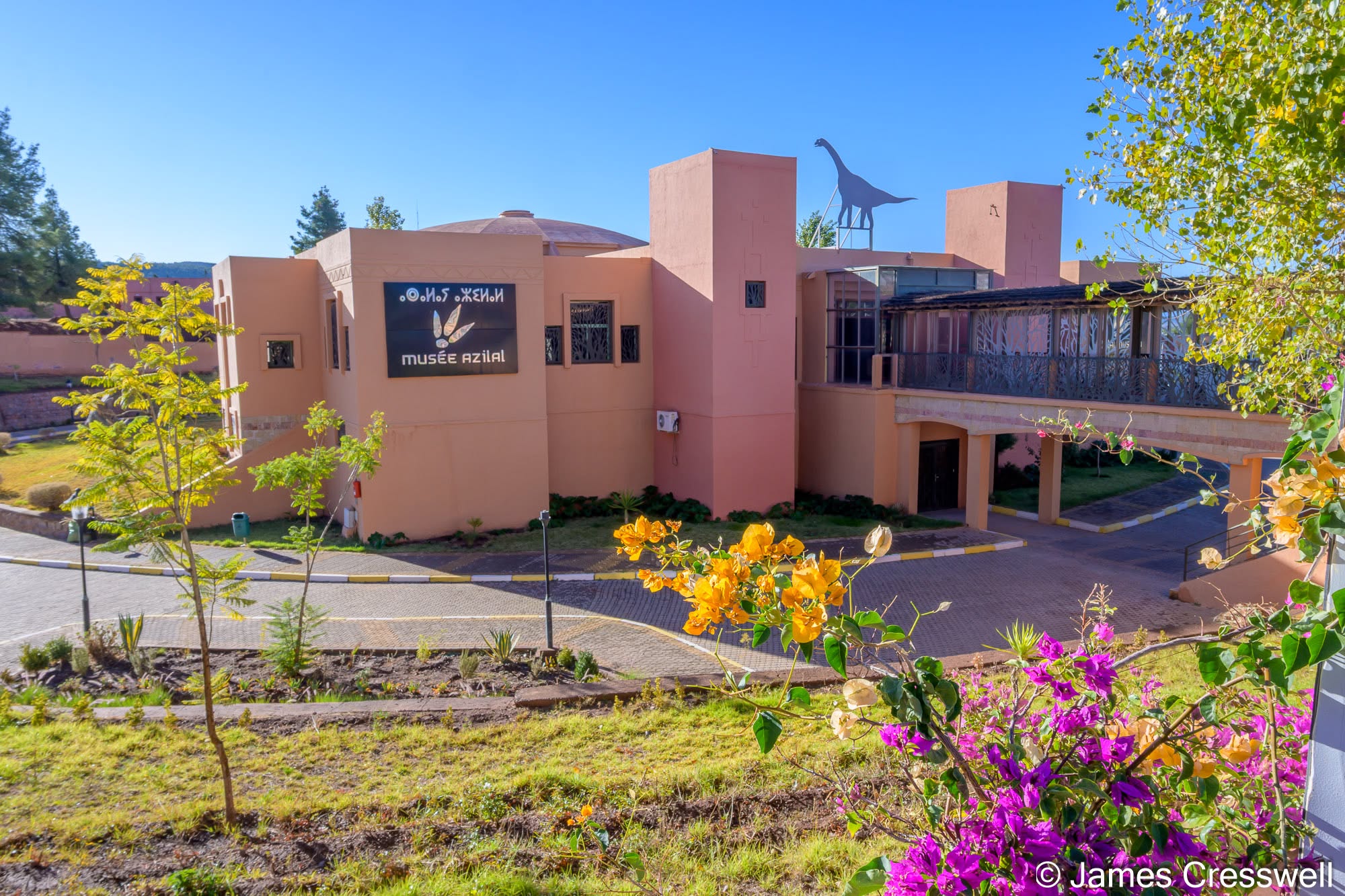
Right: The Museum of the M’Goun Geopark, Azilal. The museum is packed with geological, ecological and cultural information about the Geopark.
Top Right: The star attraction of the museum is a cast of the Atlasaurus imelakei in the main hall of the Museum of the M’Goun Geopark, Azilal. The real bones are stored in Rabat. It is one of the largest known dinosaurs and was discovered in 1979 by the Swiss geologist Michel Monbaron.
Bottom Right: Laurel examines dinosaur footprints in the village of Taghbalout. These are part of the much larger Iroutlane-Iwariden track site which is one of the largest dinosaur track sites North Africa. It covers 5 sq km and has more than a thousand footprints and is Jurassic (Oxfordian-Kimmeridgian) in age, in the lower member of the Louaridène Formation.
Day Eleven: Farewell to Morocco
After breakfast in Marrakech, it was time to say goodbye and bring our tenth Morocco adventure to a close.
Ten trips and counting.
After ten GeoWorld Travel trips to Morocco, this remarkable country has lost none of its ability to surprise us. Its combination of spectacular geology, exceptional fossils, desert landscapes, mountains and the people we meet along the way makes it a destination we never tire of exploring.
A huge thank you to everyone who joined us and helped make the November 2025 tour such an enjoyable one. We hope these 50 photographs give you a taste of what we experienced along the way.
For information on our other tours, visit our Destinations Page.


